









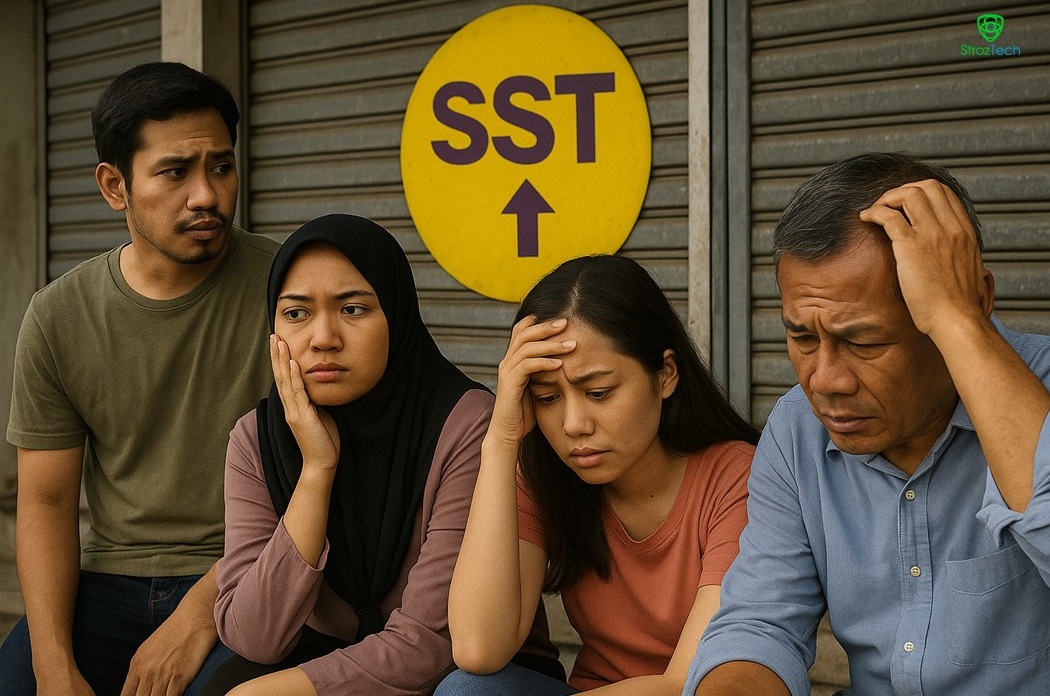
Malaysia Tax Increase Renews GST vs SST Debate
Malaysia will implement a broader Sales and Service Tax (SST) framework starting 1 July 2025, with new rates and wider coverage across key sectors. The service tax will rise to 8 percent and extend to industries such as logistics, property leasing, private education, wellness, and financial services. Meanwhile, luxury goods will face tax rates between 5 and 10 percent. The government expects this tax expansion to raise RM5 billion in 2025 and RM10 billion in 2026.
Prime Minister Anwar Ibrahim stated that the SST revision is necessary to strengthen Malaysia’s tax base while avoiding burdens on lower and middle-income groups. However, analysts and businesses have raised concerns that SST may not be the most effective tax mechanism. They argue that the country’s previous Goods and Services Tax (GST), though unpopular, offered better transparency and efficiency.
The SST system is a single-stage tax applied at either the manufacturing or service level. It does not allow businesses to recover taxes paid on inputs, causing cumulative costs to be passed along the supply chain. This hidden layering often results in higher prices for end consumers, reducing pricing transparency and increasing inflation risk.
GST better than SST at combating cost of living rise
In contrast, Malaysia’s former GST was a multi-stage value-added tax. It allowed input tax credits, ensuring taxes applied only to the actual value added at each stage of production or distribution. GST provided clear documentation for every transaction, improved compliance, and reduced the risk of double taxation. In its first full year, GST generated RM23 billion—far more than SST currently contributes.
The government claims the revised SST targets high-income groups by taxing imported luxury goods such as avocados and codfish. However, middle-income families will still feel the impact as everyday services like education, healthcare, and property rental now fall within the expanded tax net.
Anwar has stated that GST may return once the economy strengthens and minimum wages reach RM4,000. Until then, SST remains the preferred policy. Still, experts argue that Malaysia’s overreliance on SST could threaten long-term fiscal sustainability.
As regional competitors modernise their tax systems, calls for the return of GST grow louder. A well-structured GST could improve tax efficiency, reduce hidden burdens, and provide Malaysia with a stronger and more transparent revenue model.