








Gunshots and Chaos at the Philippine Senate Leads To Massive Manhunt for Senator Bato
This past week in Manila, gunshots rang out inside the Philippine Senate building amid an extraordinary political confrontation that has sent shockwaves across the country. Security forces, senators, and staff were forced to seek cover as shots were fired while authorities moved in on Senator Ronald “Bato” dela Rosa popularly known as Bato, who is wanted under an International Criminal Court (ICC) arrest warrant for alleged crimes against humanity linked to his role in the Duterte administration’s controversial war on drugs.
The situation escalated into a lockdown of the Senate, with clashes between security personnel and government agents as officials attempted to execute the warrant. Chaos continued well into the following day, prompting an emergency meeting of top government officials called by President Ferdinand “Bongbong” Marcos Jr., raising national concern over the events inside the legislative chamber. Bato ultimately fled the Senate building, avoiding arrest after days holed up inside and drawing sharp criticism from human rights groups. The spectacle has revived memories of the martial law era, when Ferdinand Marcos Sr. consolidated power by neutralizing opposition, showing that the Marcos family may be repeating historical patterns under a modern democracy.
Bato: A Politician Once at the Center of Power
Senator Ronald “Bato” dela Rosa was once a trusted enforcer of former President Rodrigo Duterte’s hard-line anti-drug campaign, serving as police chief and national police director. His rise to influence was closely tied to the Duterte brand of politics, which appealed to many Filipinos seeking order amid rising crime. That political power was not without controversy. The ICC arrest warrant against Bato alleges his involvement in systematic abuses and killings during the so-called war on drugs, with the court finding reasonable grounds to believe he shared culpability for violent operations under Duterte’s leadership. The irony is stark because the same figure who helped enforce Duterte-era policies now faces pressure and possible persecution from a president he once supported.
The Formation and Breakdown of Marcos-Duterte Political Alliance
The story of the Senate drama traces back to 2022, when Marcos Jr and the Duterte camp formed a powerful political alliance. Vice President Sara Duterte, daughter of Rodrigo Duterte, leveraged her political machinery in Mindanao, while Bato provided influence and credibility, helping Marcos Jr secure national victory. Together, their coalition appeared unstoppable. Between 2022 and 2024 Marcos Jr strengthened his presidency, using the Duterte base and his own entrenched networks. Sara Duterte emerged as a rising political star with national ambitions, while Bato maintained influence in law enforcement and legislative affairs. The wildly popular former President Duterte helped push his popularity further.
Philippine Senate Shooting
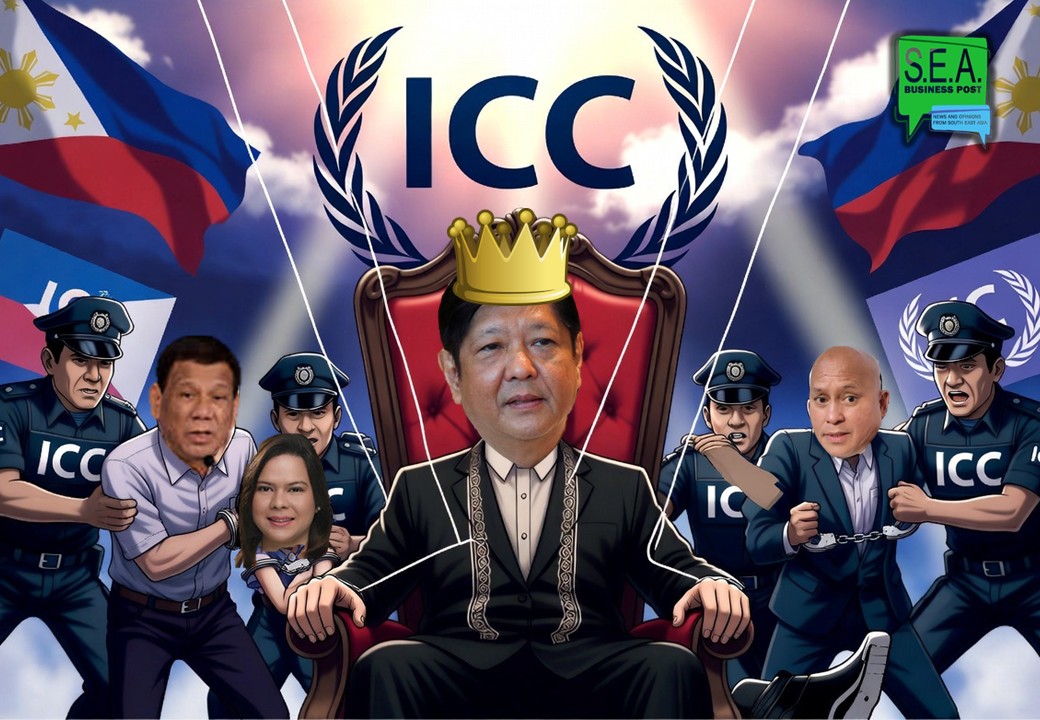
Unfortunately, that alliance began to crumble. Once in power, Marcos Jr started to side-line former President Duterte and his daughter Sara. By late 2025, cracks in the alliance became public. The House of Representatives approved articles of impeachment against Sara Duterte on multiple charges, including alleged misuse of public funds and threats directed at the president. Meanwhile, Bato faced the ICC warrant, culminating in the tense shooting and standoff at the Senate. Observers note that once Marcos Jr secured his presidency, the former allies became politically inconvenient, illustrating a classic strategy of centralizing power and neutralizing threats, reminiscent of how Marcos Sr. eliminated opposition to strengthen his rule.
Political Retribution or Accountability
Marcos Jr. has denied any government directive ordering Bato’s arrest or involvement in the Senate gunfire incident, calling for investigations into whether the chaos was genuine or a destabilization effort. Critics argue that the crisis highlights the tension between powerful political families and the rule of law in the Philippines. Human rights groups point to long-standing frustrations with impunity for alleged abuses under the Duterte-era war on drugs, and the Bato situation has become a focal point for those concerns.
The parallel with Marcos Sr. is evident. The elder Marcos used political, legal, and institutional mechanisms to consolidate authority, neutralize opponents, and strengthen his family’s dynastic control. Today, Marcos Jr appears to be following a similar playbook by sidelining allies like Sara Duterte, Rodrigo Duterte and Bato who could challenge his authority.
Lessons and Implications for Philippine Politics
This saga underscores the perils of political alliances in a landscape dominated by dynasties. Those who help powerful leaders rise can quickly become expendable once ambition and control take precedence over loyalty. It also highlights the tension between entrenched elites and outsider politicians like Duterte, who rise on merit and popularity but are more exposed to political retribution. For ordinary Filipinos, the spectacle is both cautionary and instructive. It reveals how dynastic politics continue to shape power in the Philippines and how even successful outsiders are often drawn into alliances that may ultimately turn against them.
As Sara Duterte’s impeachment trial approaches and Bato faces international legal pressure, the Philippines watches a dramatic display of power, loyalty, and betrayal that may shape the political landscape well into the next election cycle.