






Why the big controversy regarding Nicky Liow in PKR
The controversy surrounding businessman Nicky Liow has once again reopened an old and uncomfortable debate in Malaysian politics: has the country truly moved away from the era of political-business networks, or have those networks simply changed form and changed hands?
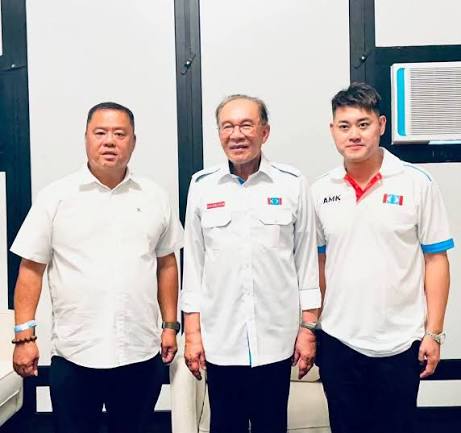
At first glance, the issue appears to be about a photograph and political optics. Images showing Nicky Liow in proximity to Prime Minister Anwar Ibrahim and wearing attire associated with Parti Keadilan Rakyat (PKR) triggered questions about his relationship with the ruling coalition. PKR has since clarified that Liow is not a party member.
But politics is not driven only by legal definitions. It is also driven by public perception.
For many Malaysians, the question is not whether a photograph proves wrongdoing. It does not. The question is how individuals with controversial backgrounds continue to gain access to influential political circles.
That question strikes at the heart of Malaysia’s long-running struggle with political patronage, elite networks and the relationship between businessmen and those in power.
For years, Malaysians were promised that the old system of political connections and privileged access would be replaced with a stronger culture of transparency and accountability.
Yet the Nicky Liow controversy has revived a familiar concern: have Malaysia’s political networks really changed, or have only the names of the people involved changed?
The Nicky Liow problem is about perception
Nicky Liow became a widely discussed figure after authorities investigated the network known as “Gang Nicky”, involving allegations related to organised crime and financial offences. He has denied wrongdoing and legal processes must determine responsibility.
However, political controversies are often not determined solely in courtrooms.
They are determined by public trust.
When a businessman with such a controversial background appears close to senior political figures, the immediate concern among critics is whether access to power remains influenced by connections rather than merit.
This is particularly sensitive for Pakatan Harapan, which built much of its political identity around reform, good governance and breaking away from the practices associated with previous administrations.
The criticism is therefore not simply about one individual.
It is about whether the standards promised during Malaysia’s reform era are being applied consistently.
The Lim Guan Eng controversy and questions over timing
The debate over political accountability did not begin with Nicky Liow.
One of the earliest controversies after the 2018 change of government involved former Penang Chief Minister and DAP leader Lim Guan Eng.
Lim faced corruption charges related to the purchase of a bungalow and allegations involving the Penang state government. After Pakatan Harapan came to power, the prosecution withdrew the case and Lim was acquitted.
Supporters argued that the decision reflected weaknesses in the prosecution’s case and that the courts must decide based on evidence rather than political pressure.
Critics, however, questioned the timing.
Their argument was not necessarily that an acquittal was impossible. Rather, they questioned whether the public would have viewed the outcome differently if the political situation had remained unchanged.
The episode contributed to a broader perception problem: that political circumstances can influence whether powerful individuals face legal pressure or political recovery.
Ahmad Zahid Hamidi and the biggest test of Anwar’s reform image
The issue became even more politically sensitive with Deputy Prime Minister and UMNO president Ahmad Zahid Hamidi.
Zahid faced 47 charges involving criminal breach of trust, corruption and money laundering.
In 2023, the High Court granted him a discharge not amounting to an acquittal after prosecutors applied to withdraw the charges.
Legally, a discharge not amounting to an acquittal is not the same as being declared innocent. The case can theoretically be revived.
But politically, the decision created a major controversy.
Anwar Ibrahim’s government was built on a coalition arrangement that included UMNO, a party that Pakatan Harapan had spent years criticising while in opposition.
For critics, Zahid’s position in government after receiving a DNAA created the appearance of political compromise.
The question they asked was simple:
If previous governments were criticised for protecting powerful figures, what makes this situation different?
Supporters of the government argue that prosecutorial decisions are made by the Attorney-General’s Chambers and that there was no political interference.
However, in politics, perception can sometimes be as damaging as reality.
Rafizi Ramli and the challenge facing reform politicians
Rafizi Ramli represents another complicated chapter in Malaysia’s political story.
For many PH supporters, Rafizi was a symbol of reform politics. He spent years as an opposition figure and faced legal battles before eventually becoming Economy Minister after Pakatan Harapan returned to power. In one of those cases, the court eventually dropped the matter, a development his supporters pointed to as vindication.
His supporters viewed his journey as evidence that reform-minded politicians could overcome political pressure.
However, critics argue that the same question applies across all political parties:
Does a person receive different treatment depending on whether they are outside or inside government?
The issue became even more politically sensitive when Rafizi himself commented on the Nicky Liow controversy, raising concerns about political-business networks and accountability.
Its controversial since he himself appears to have received the same preferential treatment.
But politically, the episode raised difficult questions for a government that came to power promising higher standards of governance.
Reform movements are often judged more harshly because their credibility depends on being different from the systems they criticised.
The businessman-politician relationship remains Malaysia’s unresolved issue
The recurring theme behind these controversies is not only corruption.
It is influence.
Malaysia, like many emerging economies, has long struggled with the relationship between business and politics. Wealthy individuals seek access to decision-makers. Politicians rely on networks, supporters and donors. Governments must regulate businesses while also maintaining political relationships.
The challenge is ensuring that these relationships do not create the perception that connections provide protection.
For investors, this issue matters.
Political stability is important, but so is confidence that rules apply equally regardless of political affiliation.
A country’s investment reputation is shaped not only by economic growth figures or infrastructure projects, but also by questions about governance, transparency and institutional independence.
Then comes Najib Razak
It is only after examining these controversies that the Najib Razak comparison emerges.
Najib remains the most prominent example of a Malaysian political leader who faced the full judicial process and received a final criminal conviction.
His SRC International case resulted in a conviction that survived multiple stages of appeal, leading to imprisonment.
For supporters of institutional reform, Najib’s conviction demonstrated that even the highest levels of power could eventually face accountability.
But for critics who point to the different outcomes involving other political figures, Najib’s case has created another uncomfortable question.
Why does it appear that Najib was the only political leader who faced the full consequences of the law, while others facing serious allegations continued their political careers, returned to government, or remained influential?
That question does not determine guilt or innocence in any individual case.
It reflects a broader public perception about consistency.
The question Malaysia still has to answer
The challenge facing Malaysia is no longer only about individual politicians.
It is about whether citizens believe the system works equally for everyone.
A functioning democracy cannot depend only on whether one powerful person is punished. It depends on whether the public believes the same standards apply across all political parties, all alliances and all levels of influence.
The questions remain:
Has Malaysia truly moved beyond political patronage, or has the system simply changed its beneficiaries?
Are legal decisions being viewed as independent because of strong institutions, or are they being judged through the lens of political alliances?
Can any government claim the moral high ground if its own allies face controversies similar to those it once criticised?
And ultimately, will Malaysians believe that justice depends on evidence alone, rather than on who holds power at a particular moment?
Until those questions are convincingly answered, the debate over political accountability in Malaysia will continue.