








SpaceX Massive IPO: Is the USD1.75 Trillion Valuation Reality or Science Fiction?
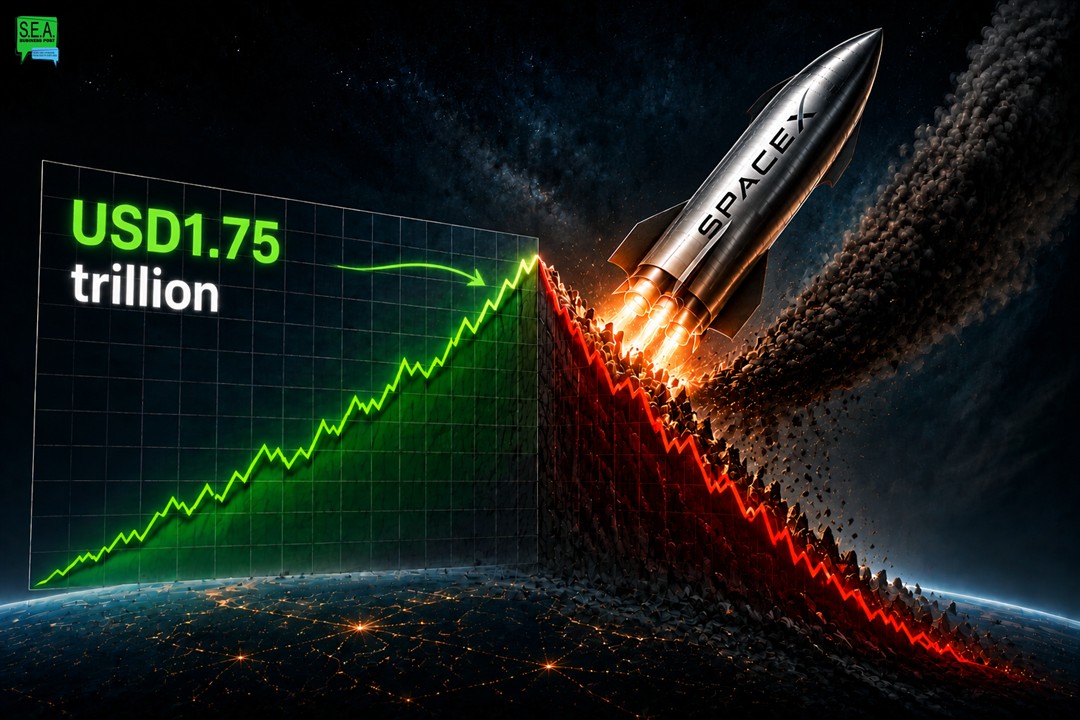
The proposed SpaceX mega IPO is shaping up to be one of the largest public offerings in history. At a reported valuation of USD1.75 trillion, the company would immediately join the ranks of the world’s most valuable corporations. Supporters argue that investors are buying exposure to Starlink, Starship, artificial intelligence, and the future of space infrastructure. Critics, however, may reasonably ask a simpler question: do the numbers support the valuation?
Traditional valuation methods suggest otherwise.
Using reported free cash flow estimates of approximately USD11 billion for 2026, a discounted cash flow analysis produces an enterprise value closer to USD430 billion. Applying generous EBITDA multiples produces a valuation range of roughly USD400 billion to USD500 billion. While assumptions can vary, the gap between conventional valuation techniques and the proposed IPO valuation remains striking.
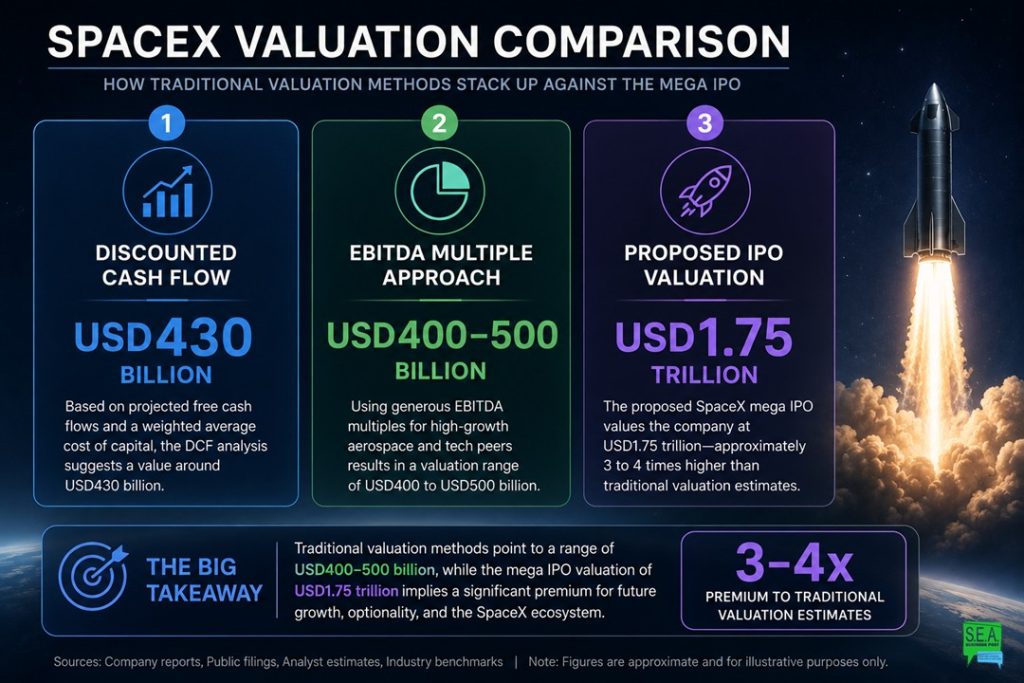
In simple terms, the IPO valuation is approximately three to four times higher than what traditional valuation approaches would suggest.
A Story Bigger Than Aerospace
Supporters argue that SpaceX should not be viewed through the same lens as traditional aerospace companies. The company combines launch services, Starlink’s satellite communications network, future Starship operations, and the AI capabilities acquired through xAI.
That narrative certainly has appeal. Yet investors should recognise that much of the valuation rests on future possibilities rather than current financial performance. Starlink continues to grow rapidly, but Starship remains a long-term bet. Artificial intelligence may create substantial value, but the scale and timing remain uncertain.
The market is therefore being asked to price not only a company, but an ecosystem.
That distinction matters.
Following the Money
The more interesting story may not be the valuation itself but the ownership trail that led to this IPO.
The chain began with Elon Musk’s acquisition of Twitter in 2022. The structure evolved over several years, starting with Twitter’s acquisition by Musk and a group of investors in 2022. By 2025, the platform had been rebranded as X, which later merged into xAI through a stock-for-stock transaction. In 2026, xAI was subsequently merged into SpaceX through another stock-for-stock transaction, and the proposed SpaceX IPO would then create public market liquidity for investors who had participated in the earlier stages of this ownership chain.
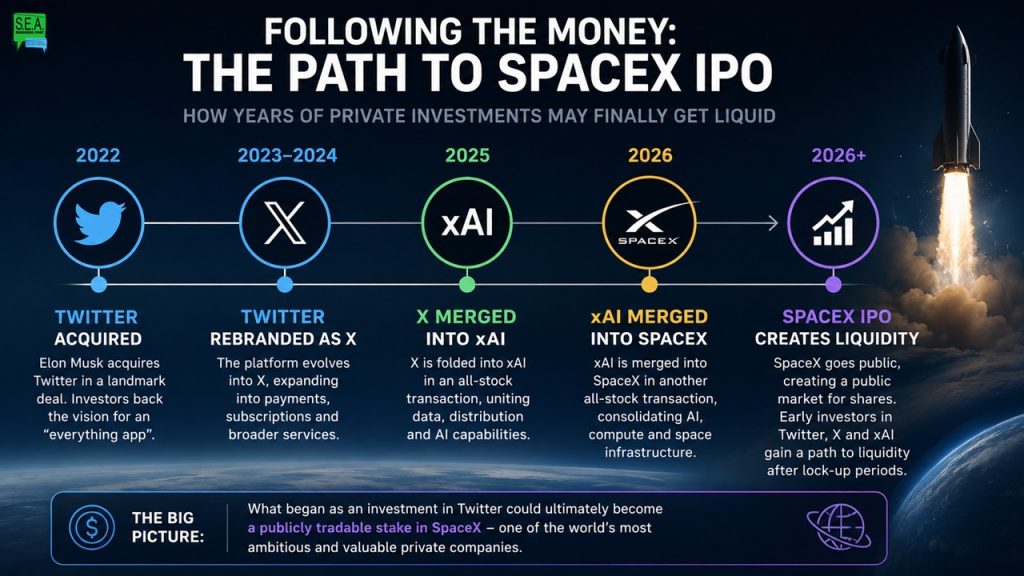
This progression means that many investors who originally entered through Twitter or X ultimately became SpaceX shareholders without ever receiving cash.
The Liquidity Event Nobody Is Talking About
The IPO is not technically a cash-out transaction. Proceeds are expected to go to SpaceX rather than existing shareholders.
However, public listings create something private companies cannot: liquidity.
For years, investors in Twitter, X and xAI held positions in private entities with limited exit opportunities. Once SpaceX becomes publicly traded, those same investors gain access to a liquid market where shares can eventually be sold after lock-up restrictions expire.
In effect, the IPO transforms previously illiquid holdings into publicly tradable securities.
This does not prove the IPO was designed as an exit vehicle. Yet it does create a pathway for early investors to realise value that may have been locked up for years.
That outcome should not be ignored when evaluating who benefits from the transaction.
Why Public Investors Should Pay Attention
The valuation debate is ultimately about risk allocation.
Early investors entered the Musk ecosystem at significantly lower valuations through Twitter, X, xAI or private SpaceX funding rounds. Public investors are being asked to enter at a valuation of USD1.75 trillion.
If SpaceX successfully dominates satellite communications, commercial launch services, AI infrastructure and future space transportation, the valuation may eventually be justified.
If those ambitions fall short, public investors may discover they paid a premium for expectations that never materialised.
Final Assessment
SpaceX remains one of the most impressive private companies ever created. Its technological achievements are undeniable. The question facing investors is not whether SpaceX is an extraordinary company. The question is whether it is an extraordinary company worth USD1.75 trillion today.
Traditional valuation models suggest otherwise. More importantly, the IPO creates a mechanism that gradually converts years of private investments across Twitter, X and xAI into liquid public equity.
Investors should examine not only the science fiction embedded in the valuation, but also the financial engineering embedded in the ownership structure.