








ASEAN Summit Issues Bold Gaza, Nuclear, Tariff Statements
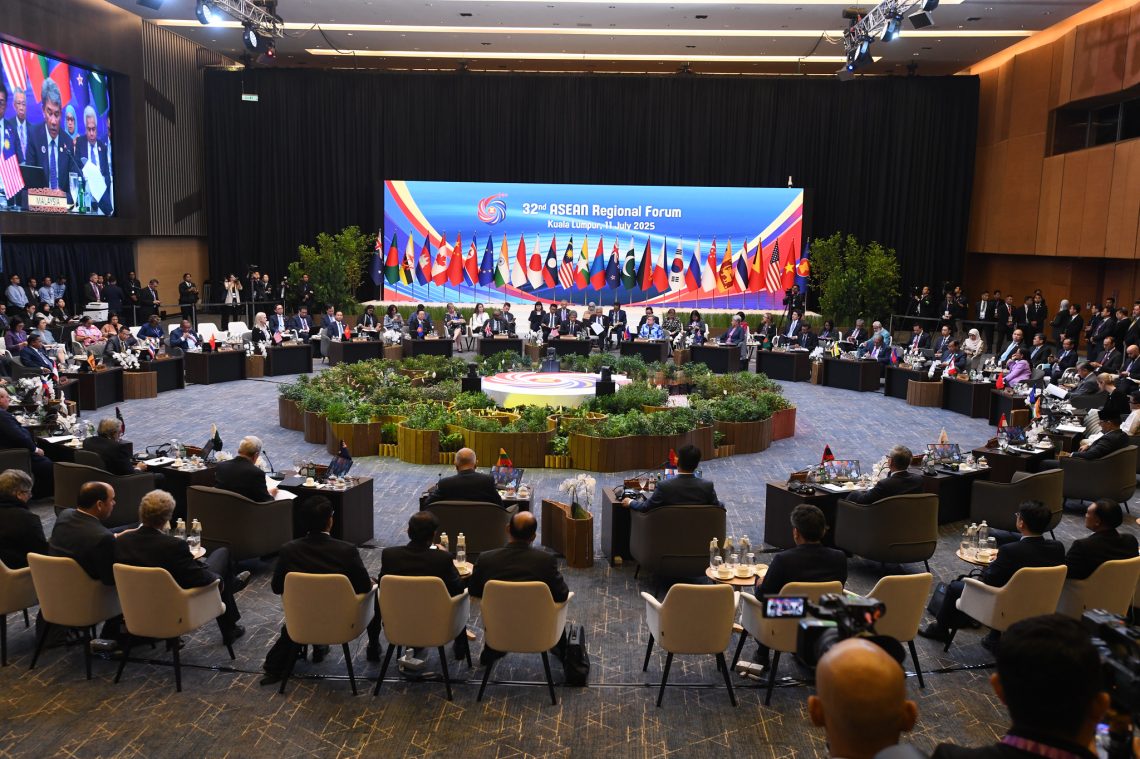
The recent ASEAN Foreign Ministers’ Meeting in Kuala Lumpur brought major global issues to the forefront, with Malaysia leading efforts to reaffirm the bloc’s role in promoting peace, stability, and multilateral cooperation. As the current chair, Malaysia steered discussions on the crisis in Gaza, Southeast Asia’s commitment to remaining a nuclear-weapon-free zone, and concerns over impending trade tariffs from the United States.
Gaza Conflict Prompts Unified ASEAN Response
One of the most significant outcomes from the meeting was ASEAN’s renewed call for a ceasefire in Gaza. Under Malaysia’s leadership, the bloc released a formal statement urging all parties to end hostilities and respect international humanitarian law. The ministers emphasized the urgent need for unimpeded humanitarian access to the affected population. All member states also called for a two-state solution and stressed that the international community must act swiftly to prevent further civilian casualties.
This marked a strong diplomatic message from ASEAN. Traditionally cautious on international conflicts outside the region, the bloc is now taking a firmer stance on global humanitarian issues. Malaysia’s proactive approach reflects its broader theme for 2025: “ASEAN Matters: Inclusivity and Sustainability.”
Rubio Visit Underscores U.S. and Southeast Asia Tensions
United States Secretary of State Marco Rubio made a short but closely watched visit to Kuala Lumpur during the summit. His 36-hour stop was aimed at reaffirming U.S. ties with ASEAN nations amid growing fears over protectionist trade policies. However, many members expressed concern over new tariffs being proposed by the U.S., which could impact exports from the region. Some of these tariffs may rise as high as 40 percent, raising fears of long-term economic disruption.
While Rubio assured the ministers that ASEAN countries would not be unfairly targeted and hinted at the possibility of better deals for Southeast Asia, the mood remained cautious. His meetings with China’s Foreign Minister Wang Yi and Russia’s Foreign Minister Sergey Lavrov on the sidelines further reflected the delicate balancing act ASEAN must play as U.S.-China tensions escalate.
Reaffirming Southeast Asia’s Nuclear-Free Zone
Malaysia placed strong focus on the Southeast Asia Nuclear-Weapon-Free Zone (SEANWFZ), originally established in 1995. During the summit, ASEAN reaffirmed its commitment to keeping the region free from nuclear weapons. Malaysia’s Foreign Minister Mohamad Hasan reiterated the bloc’s call for nuclear-armed states to sign the treaty’s protocol.
China responded positively, expressing its readiness to sign the protocol and respect the treaty’s terms. This would mark a milestone for ASEAN, as China’s commitment would strengthen the region’s status as a nuclear-free zone and reinforce confidence in ASEAN’s role as a neutral and stabilizing force in global affairs.
The SEANWFZ treaty covers all ten ASEAN members and prohibits the development, acquisition, testing, or use of nuclear weapons within the region. It also bans the stationing of nuclear weapons by outside powers in any Southeast Asian territory. The bloc’s unified voice on this matter shows its determination to maintain peace and security in Southeast Asia through diplomacy rather than deterrence.
Malaysia Leads as 2025 Chair
Malaysia currently holds the ASEAN chair for 2025. Its leadership has focused on inclusive growth, digital transformation, environmental sustainability, and a stronger voice in global diplomacy. The chairmanship rotates annually among member states, and Malaysia is leveraging its position to push forward meaningful initiatives both within the region and on the international stage.
The Philippines is set to take over the chairmanship in November 2025 during the 47th ASEAN Summit. The next summit will be held in Putrajaya, where the handover will take place. The Philippines is expected to continue building on the momentum set by Malaysia, especially in matters of economic resilience and regional security.
ASEAN’s Legacy and Relevance Today
Founded on 8 August 1967, ASEAN was established by Indonesia, Malaysia, the Philippines, Singapore, and Thailand. Over the years, the bloc expanded to include Brunei, Vietnam, Laos, Myanmar, and Cambodia. The group was created to promote regional peace, accelerate economic development, and protect Southeast Asia from Cold War rivalries.
Today, the trade and diplomatic bloc remains a crucial platform for regional diplomacy, representing over 660 million people. It operates on principles of consensus, non-interference, and peaceful resolution of disputes. The recent summit in Kuala Lumpur shows that trade bloc is evolving. It is no longer a quiet diplomatic forum but a collective voice capable of influencing global discourse on security, trade, and human rights.