





Remarkable flood control corruption: contractors, Discaya, Marcos
The issue of corruption not only undermines the integrity of the flood control sector but also erodes public trust in government contracts.
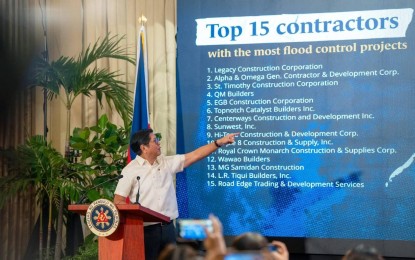
Senators probing the flood-control program say a tight circle of roughly fifteen contractors cornered around ₱100 billion in awards while floods persisted. Hearings and agency briefings flagged clusters of “ghost projects” and substandard river walls in Central Luzon, especially Bulacan, where multiple packages were booked but poorly delivered.
Wawao Builders was cited for dozens of awards between 2022 and 2025, with totals around ₱4.2 billion nationwide and a heavy footprint in Bulacan. SYMS Construction logged at least sixteen projects worth about ₱931.2 million over the same span and roughly ₱1 billion in Bulacan alone. Separate local inquiries also placed QM Builders under scrutiny for multibillion-peso flood works and unusually rapid deal flow, raising concerns about potential corruption in the flood control sector.
Sarah Cezarah Discaya and the contractor web
Corruption in the flood control sector has been a growing concern, affecting both the quality of infrastructure and the allocation of resources.
Sarah “Cezarah” Discaya sits at the center of rising suspicion. Public records and Senate discussion tie her to Alpha & Omega General Contractor & Development Corp. and St. Timothy Construction Corp., both repeatedly named in flood-control packages. She drew sharper attention after skipping a Blue Ribbon hearing where she was summoned as Alpha & Omega’s president. Lawmakers weighed contempt citations as engineers and residents detailed canals that silted up within weeks, rock sheds that cracked, and riprap that vanished with the first strong current.
Blacklisted under Duterte, resurfacing under Marcos
The older paper trail is stark. St. Gerrard Construction. It is publicly associated with the Discaya family. It was blacklisted by the Department of Public Works and Highways in 2020 during the Duterte administration for performance failures. The sanction lapsed after a year. By the Marcos years, related interests surfaced again in procurement streams for flood control. That rebound illustrates a structural flaw: blacklists that expire quietly, enabling sanctioned actors or affiliates to reenter the pipeline with fresh corporate wrappers, joint ventures, or name variations. It is the kind of revolving door that makes accountability a mirage and keeps corruption profitable.
Social-media blame vs verifiable history
Social media has tried to pin the current fiasco entirely on Duterte-era favouritism, often naming the Discayas. To date, no verified mainstream documentation proves special treatment beyond the 2020 blacklist itself. What is documented now is happening on Marcos’s watch: the clustering of awards, the ghost-project pattern, and the return of firms that regulators previously flagged. The political instinct to outsource blame collides with procurement data that spans administrations and shows a system that adapts rather than reforms.
Marcos’s “performative reform” problem
President Ferdinand Marcos Jr. has used forceful language. He threatened charges tantamount to economic sabotage for fraudulent works, ordered the publication of project lists, and dismissed a DPWH undersecretary amid irregularity claims. He publicly rebuked contractors tied to half-built or missing projects and toured sites such as a ₱264 million rock shed to dramatize poor delivery. Critics counter that these moves are heavy on optics and light on structure. Without permanent debarment that follows beneficial owners, criminal cases against executives, the clawback of progress payments, and procurement rules that kill license-renting and serial “single-province monopolies,” the spectacle remains a television product. The money trails do not end with press conferences.
Bulacan audit: the test of will
Complaints channeled through the Sumbong sa Pangulo platform triggered a Commission on Audit fraud audit focused on Bulacan, where allocations have been most concentrated since 2022. Auditors are expected to reconcile contract IDs, payment vouchers, and physical accomplishment reports against what exists along rivers and esteros. If executed rigorously, the audit can establish a baseline: what taxpayers paid, what was physically built, what failed, and who signed off. That evidence should move cases from hearings to indictments and civil recoveries.
What the numbers show regarding corruption
Across hearings and agency files, several facts are now hard to dismiss. A small cluster of firms amassed a disproportionate share of flood money. St. Gerrard was blacklisted in 2020 yet affiliated interests resurfaced later. Wawao, SYMS, and QM Builders feature prominently in award tallies. Only a fraction of funds appears to reach durable infrastructure, with the rest evaporating in layers of padding, “pass-through” subs, and hurried works that wash away each rainy season. Until reforms target the ownership behind the logos and make debarment real and lasting, corruption will keep winning bids—and Filipinos will keep paying twice, in taxes and in floodwater.