







Trump 20-Point Gaza Plan Ridiculous and Foolish
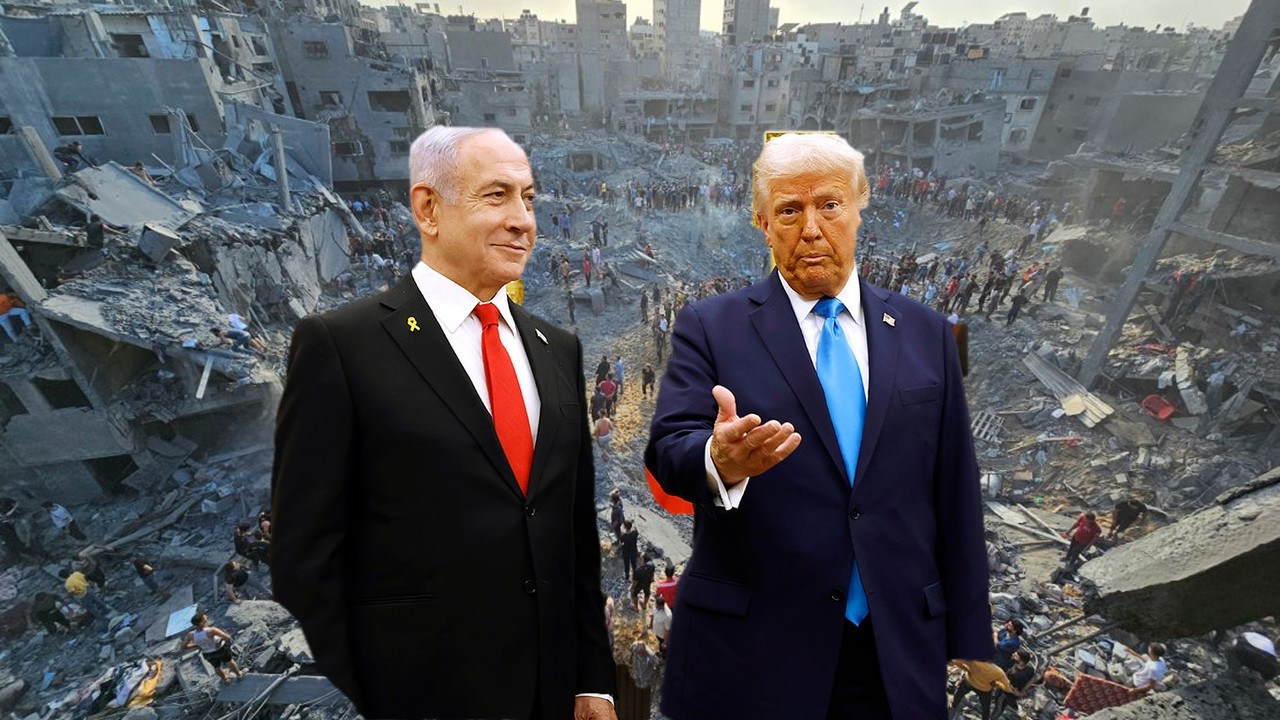
On September 29, 2025, former United States President Donald Trump unveiled a 20-point plan to end the war in Gaza. Israeli Prime Minister Benjamin Netanyahu embraced the proposal as a step toward stability, and headlines carried talk of a breakthrough. But beneath the glossy presentation, the plan looks like a rebranded version of the pre–October 7, 2023, status quo, when Gaza was already under blockade, externally managed, and denied sovereignty.
Trump 20-Point Gaza Peace Plan
Trump’s plan sets out the following twenty points in his own words:
-
Gaza will be a deradicalized terror-free zone that does not pose a threat to its neighbors.
-
Gaza will be redeveloped for the benefit of the people of Gaza, who have suffered more than enough.
-
If both sides agree to this proposal, the war will immediately end. Israeli forces will withdraw to the agreed upon line to prepare for a hostage release. During this time, all military operations, including aerial and artillery bombardment, will be suspended, and battle lines will remain frozen until conditions are met for the complete staged withdrawal.
-
Within 72 hours of Israel publicly accepting this agreement, all hostages, alive and deceased, will be returned.
-
Once all hostages are released, Israel will release 250 life sentence prisoners plus 1700 Gazans who were detained after October 7th, 2023, including all women and children detained in that context. For every Israeli hostage whose remains are released, Israel will release the remains of 15 deceased Gazans.
-
Once all hostages are returned, Hamas members who commit to peaceful co-existence and to decommission their weapons will be given amnesty. Members of Hamas who wish to leave Gaza will be provided safe passage to receiving countries.
-
Upon acceptance of this agreement, full aid will be immediately sent into the Gaza Strip. At a minimum, aid quantities will be consistent with what was included in the January 19, 2025, agreement regarding humanitarian aid, including rehabilitation of infrastructure (water, electricity, sewage), rehabilitation of hospitals and bakeries, and entry of necessary equipment to remove rubble and open roads.
-
Entry of distribution and aid in the Gaza Strip will proceed without interference from the two parties through the United Nations and its agencies, and the Red Crescent, in addition to other international institutions not associated in any manner with either party. Opening the Rafah crossing in both directions will be subject to the same mechanism implemented under the January 19, 2025, agreement.
-
Gaza will be governed under the temporary transitional governance of a technocratic, apolitical Palestinian committee, responsible for delivering the day-to-day running of public services and municipalities for the people in Gaza. This committee will be made up of qualified Palestinians and international experts, with oversight and supervision by a new international transitional body, the “Board of Peace,” which will be headed and chaired by President Donald J. Trump, with other members and heads of State to be announced, including Former Prime Minister Tony Blair. This body will set the framework and handle the funding for the redevelopment of Gaza until such time as the Palestinian Authority has completed its reform program, as outlined in various proposals, including President Trump’s peace plan in 2020 and the Saudi-French proposal, and can securely and effectively take back control of Gaza. This body will call on best international standards to create modern and efficient governance that serves the people of Gaza and is conducive to attracting investment.
-
A Trump economic development plan to rebuild and energize Gaza will be created by convening a panel of experts who have helped birth some of the thriving modern miracle cities in the Middle East. Many thoughtful investment proposals and exciting development ideas have been crafted by well-meaning international groups, and will be considered to synthesize the security and governance frameworks to attract and facilitate these investments that will create jobs, opportunity, and hope for future Gaza.
-
A special economic zone will be established with preferred tariff and access rates to be negotiated with participating countries.
-
No one will be forced to leave Gaza, and those who wish to leave will be free to do so and free to return. We will encourage people to stay and offer them the opportunity to build a better Gaza.
-
Hamas and other factions agree to not have any role in the governance of Gaza, directly, indirectly, or in any form. All military, terror, and offensive infrastructure, including tunnels and weapon production facilities, will be destroyed and not rebuilt. There will be a process of demilitarization of Gaza under the supervision of independent monitors, which will include placing weapons permanently beyond use through an agreed process of decommissioning, and supported by an internationally funded buy back and reintegration program all verified by the independent monitors. New Gaza will be fully committed to building a prosperous economy and to peaceful coexistence with their neighbors.
-
A guarantee will be provided by regional partners to ensure that Hamas, and the factions, comply with their obligations and that New Gaza poses no threat to its neighbors or its people.
-
The United States will work with Arab and international partners to develop a temporary International Stabilization Force (ISF) to immediately deploy in Gaza. The ISF will train and provide support to vetted Palestinian police forces in Gaza, and will consult with Jordan and Egypt who have extensive experience in this field. This force will be the long-term internal security solution. The ISF will work with Israel and Egypt to help secure border areas, along with newly trained Palestinian police forces. It is critical to prevent munitions from entering Gaza and to facilitate the rapid and secure flow of goods to rebuild and revitalize Gaza. A deconfliction mechanism will be agreed upon by the parties.
-
Israel will not occupy or annex Gaza. As the ISF establishes control and stability, the Israel Defense Forces (IDF) will withdraw based on standards, milestones, and timeframes linked to demilitarization that will be agreed upon between the IDF, ISF, the guarantors, and the United States, with the objective of a secure Gaza that no longer poses a threat to Israel, Egypt, or its citizens. Practically, the IDF will progressively hand over the Gaza territory it occupies to the ISF according to an agreement they will make with the transitional authority until they are withdrawn completely from Gaza, save for a security perimeter presence that will remain until Gaza is properly secure from any resurgent terror threat.
-
In the event Hamas delays or rejects this proposal, the above, including the scaled-up aid operation, will proceed in the terror-free areas handed over from the IDF to the ISF.
-
An interfaith dialogue process will be established based on the values of tolerance and peaceful co-existence to try and change mindsets and narratives of Palestinians and Israelis by emphasizing the benefits that can be derived from peace.
-
While Gaza re-development advances and when the PA reform program is faithfully carried out, the conditions may finally be in place for a credible pathway to Palestinian self-determination and statehood, which we recognize as the aspiration of the Palestinian people.
-
The United States will establish a dialogue between Israel and the Palestinians to agree on a political horizon for peaceful and prosperous co-existence.
Why the Plan Falls Short
The most glaring problem is legitimacy. Governance is placed in the hands of a “Board of Peace” chaired by Trump and joined by Tony Blair. Such arrangements are normally overseen by neutral international bodies, not individual political figures. Trump’s self-appointment turns Gaza’s reconstruction into a personal project tied to his ambitions. Blair’s inclusion raises its own alarms. His reputation was already damaged by his role in the 2003 invasion of Iraq, a war launched on false intelligence that destabilised the region for decades. For Palestinians, his presence signals interference shaped by failed Western interventions rather than impartial stewardship.
The plan also replaces UN peacekeepers with a new International Stabilization Force. Israel’s hostility to UN missions explains the choice, but the cost is international legitimacy. A UN mandate ensures neutrality and accountability to the global community. The ISF, by contrast, would appear as an American- and Israeli-aligned force, effectively an extension of the blockade under a different name.
The sidelining of the Palestinian Authority is another critical flaw. Governance is delayed until the PA enacts reforms, leaving Gaza to be run by technocrats supervised by outsiders. While reform is overdue, excluding the PA entirely undermines Palestinian institutions and further fragments national leadership. A peace plan that denies Palestinians their own representatives cannot claim credibility.
Accountability is missing. Netanyahu is facing accusations of war crimes at the International Court of Justice. Yet, he remains central to setting withdrawal timetables and security arrangements. This lets an accused leader dictate the terms of peace, an arrangement incompatible with international justice. It entrenches impunity for Israeli leaders while demanding unconditional concessions from Palestinians.
The West Bank is ignored altogether. Illegal settlements, land confiscations, and the occupation of Jerusalem go unmentioned. By isolating Gaza from the broader conflict, the plan avoids addressing the territorial issues at the core of Palestinian aspirations. Any plan that pretends Gaza can be solved separately is doomed to repeat the cycle of resentment.
Finally, the promise of statehood is vague and conditional. Palestinians are told they may one day achieve self-determination if the PA reforms to outside satisfaction. This pattern of endless deferral has defined decades of failed negotiations. Once again, sovereignty is postponed indefinitely while Israel retains control.
Why It Looks Like the Pre–October 7 Status Quo
Before October 7, Gaza was blockaded, its economy collapsed, and its population denied sovereignty. Israel and Egypt controlled its borders, while the Palestinian Authority had no authority inside. Trump’s plan recreates the same structures. Israel maintains a security perimeter until vague milestones are met. Governance is outsourced to outsiders. Palestinians remain dependent on foreign approval rather than exercising sovereignty. It is essentially the same cage, repainted.
A Fairer Alternative
A genuine solution must look very different. Governance should be entrusted to a United Nations transitional authority working with a reformed Palestinian Authority, ensuring neutrality and Palestinian ownership. Security should be provided by UN peacekeepers, with Egypt and Jordan contributing but under UN command, and later transitioned to restructured Palestinian security forces. This avoids the perception of occupation and builds legitimacy.
Accountability must apply to all sides. Hamas leaders who committed atrocities and Israeli officials accused of war crimes must both face justice at the International Criminal Court. Granting amnesty to one side while shielding the other perpetuates impunity.
Reconstruction funds should flow through a UN-supervised trust fund, not a Trump-branded economic panel. This guarantees transparency and prevents profiteering. The West Bank must also be included. Settlement expansion must stop, and steps toward reversal must begin. Treating Gaza in isolation is a recipe for failure.
Finally, Palestinians must have a clear political horizon. Elections across both Gaza and the West Bank, monitored by the international community, should lead to a recognised statehood process. Anything less keeps Palestinians trapped under indefinite occupation.
What the Future Holds
If Trump’s plan is implemented, hostilities may pause, and humanitarian aid may flow. Palestinians may see short-term relief. But because sovereignty is absent, settlements are ignored, and accountability is one-sided, grievances will fester. In time, violence will almost certainly return.
If instead a UN-led, Palestinian-owned alternative emerges, there is hope for lasting stability. Sovereignty, justice, and equal accountability would provide a genuine foundation for peace. That road is difficult, but without it, no resolution will hold.
Trump’s 20 point plan offers temporary calm but long-term stagnation. By tying the entire framework to his personal leadership, it risks collapsing once his presidency ends. Palestinians could be left in limbo again, their future dependent not on their own institutions but on the political fortunes of one American leader. Real peace cannot be built on such uncertainty. A fairer alternative, rooted in international legitimacy and Palestinian ownership, offers the harder path to justice and stability. The choice is whether Gaza remains a place of recurring tragedy or finally becomes a foundation for Palestinian freedom and regional peace.