









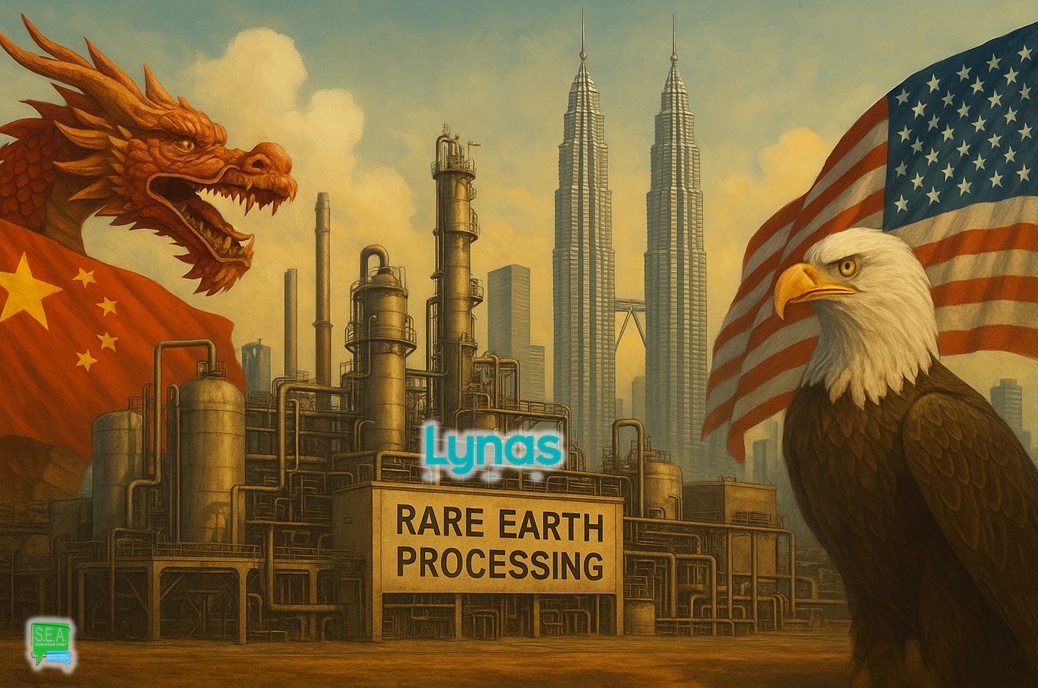
Lynas and Malaysia’s Rare Earth Hypocrisy
Lynas has become one of the most important names in Malaysia’s modern industrial story. What began as a highly controversial rare earth processing plant in Kuantan is now viewed as a strategic national asset. Over a decade ago, Lynas faced some of the loudest protests the country had ever seen. Opposition groups painted the rare earth plant as dangerous, and environmentalists rallied thousands of people. Political parties produced video ads showing fictional scenes of people turning into mutants because of the rare earth plant. They framed it as a radioactive monster that would harm communities.
From Protest to Power
Today, the situation has flipped. Many of the same politicians who once attacked Lynas are now in power. The rare earth plant is no longer a villain but an economic advantage. This silence is not because the concerns have disappeared. It is because Lynas is now part of a global rare earth strategy. Malaysia is seen as a rare earth hub at a time when the U.S. and China are competing for control of the supply chain.
Najib’s Strategic Move
Lynas was brought to Malaysia under Najib Razak’s leadership. At that time, China dominated the rare earth industry. Najib supported Lynas because he believed Malaysia should have a rare earth processing hub outside China. His government saw the rare earth sector as a way to bring in foreign investment, create skilled jobs, and link Malaysia to global industries. Although Lynas faced political backlash, Najib showed early foresight in understanding the strategic importance of rare earth materials. Today, that decision looks far more significant as rare earth demand grows around the world.
A Global Supply Chain Shift
China still controls about 70 to 90 percent of global rare earth processing. It has tightened export rules and increased oversight of rare earth shipments. This has made the U.S. and its allies anxious. They now look for alternative partners to reduce reliance on China. Lynas is the only major rare earth processing plant outside China. This makes Malaysia strategically important to both sides of the rivalry. What was once a local political issue is now a global security matter.
The Silence of Former Protesters
When the opposition campaigned against Lynas, they treated the rare earth plant as a national disaster. Now they are silent because shutting Lynas down would hurt Malaysia’s economic and geopolitical position. The rare earth sector has become too valuable. It attracts foreign investors, technology, and downstream opportunities. Civil society groups that once protested have lost momentum. Lynas is no longer an easy political target because rare earth demand has changed the game.
Malaysia’s Resource Advantage
Malaysia has an estimated 16 million tonnes of rare earth deposits worth around US$175 billion. The government has banned raw exports and insists on refining and processing rare earth materials locally. This approach mirrors how resource-rich countries build stronger industries. Lynas continues to operate and expand its rare earth capabilities. Malaysia now wants to build midstream and downstream industries to move beyond raw processing into manufacturing high-value products.
Irony and Opportunity
The rare earth story is full of irony. Najib Razak, who brought Lynas to Malaysia, faced intense criticism from the opposition. That same opposition now governs a country that relies on Lynas. The environmental issues have not vanished, but they are balanced against national interest and global demand for rare earth materials. Malaysia now sits in a powerful position between China and the U.S. because it can leverage on its position in the rare earth supply chain.
Lynas was once an easy target. Today, it is a strategic prize. As rare earth competition intensifies, Malaysia will have to navigate this carefully. The country’s future role in rare earth production and processing will shape its economic strategy for decades. What began as a political protest has turned into an unexpected strategic advantage.