





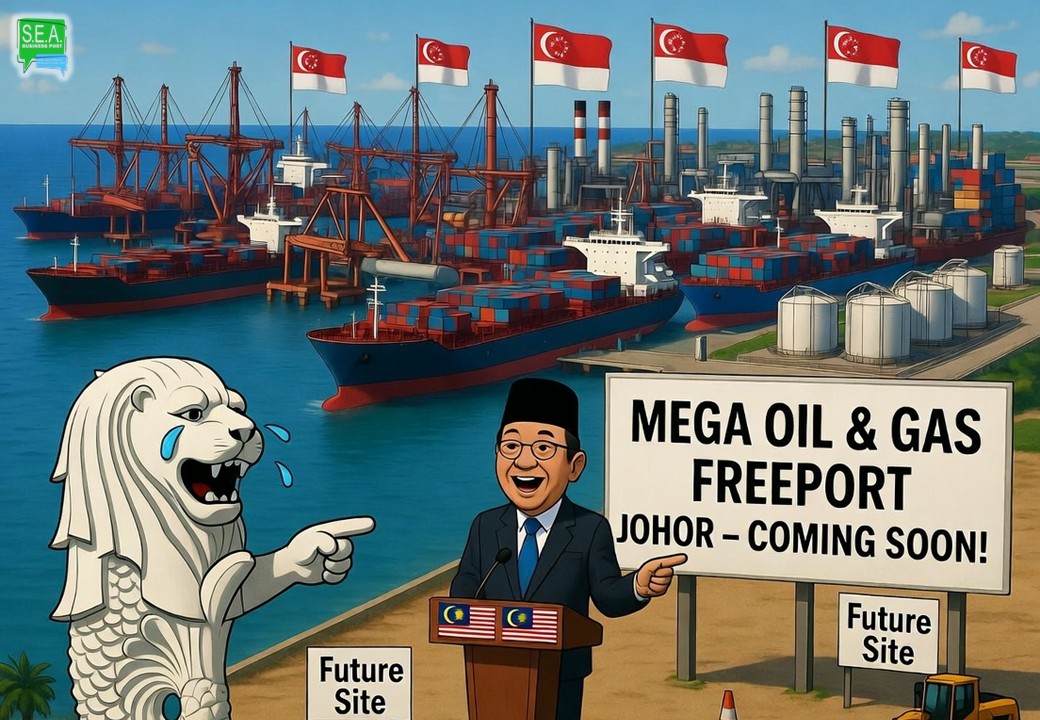
Will Maharani Freeport in Johor Malaysia Disrupt Singapore?
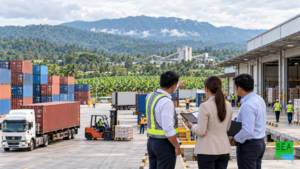
Maharani Freeport has been announced as Malaysia’s bold new mega maritime and energy hub built on three reclaimed islands off Muar Johor. It is framed as a deep water free trade zone positioned along the Straits of Malacca with the aim of attracting global oil traders logistics operators ship to ship transfer services and storage based industries. Supporters claim that Maharani Freeport could generate up to 45k jobs and secure RM144 billion in investment.
Skeptics argue the numbers sound aspirational rather than grounded in guaranteed demand. The project promises capacity to berth very large crude carriers but infrastructure does not create economic value unless utilisation rises to match theory. If the plan unfolds as advertised Maharani Freeport could reposition Johor within regional shipping corridors.
Economic projections for Maharani Freeport
To evaluate Maharani Freeport realistically the headline numbers must be separated from operational economics. The 45k job claim appears to represent long tail employment including indirect suppliers logistics labour shipyard work and administrative growth. Mega ports rarely produce immediate employment spikes. They scale workforce gradually as tenants arrive. If tenancy drag occurs job creation may fall far short. The RM144 billion projection also deserves scrutiny because it reflects investment potential not committed capital.
For Maharani Freeport to achieve this scale global traders must shift storage routing and bunkering from alternative hubs and commit long term contracts. Incentives reduce cost but cost is only one factor in investment decisions. Governance legal certainty insurance and established financial ecosystems remain decisive. Without strong anchor tenants the risk remains that Maharani Freeport grows slower than projected.
Reality behind the investment promise
Maritime hubs succeed through throughput not architecture. A port with empty berths remains a sunk asset regardless of reclaimed land size. Maharani Freeport will require years to secure throughput that reflects meaningful economic output. Conservative estimates suggest one to three years for basic storage and transfer activity but five to ten years for fully realised industrial clusters. If utilisation remains low the project risks sliding into partial performance or becoming a question mark for future administrations. That outcome is not inevitable but history shows that many mega hubs overestimate initial uptake. The true test begins not at launch but at tenant signing volume flow and financial performance.
Can Maharani Freeport compete with Singapore
Singapore remains the region’s dominant maritime engine with deep capital markets marine insurance trading desks maritime arbitration and forty years of regulatory credibility. A port economy is not merely steel cranes and deep water. It is trust law liquidity and talent concentration. Maharani Freeport may function as a secondary hub that absorbs price sensitive operators needing cheaper storage or bunkering. Singapore may retain high value services while Malaysia gains operational growth from overflow. The question is not whether Maharani Freeport replaces Singapore but whether it finds profitable differentiation. If anchor tenants logistics chains bunkering networks and maritime finance infrastructure develop the balance of power could shift moderately.
Why Malaysia still pursues this project
Malaysia already hosts Pengerang where Petronas and Aramco developed refinery and petrochemical capabilities. That facility sits upstream. Maharani Freeport targets midstream and downstream logistics adding diversity to national energy strategy. Malaysia wants a dual artery system Pengerang for refining and Maharani Freeport for trade flow. If executed well Malaysia may capture more value instead of exporting crude and importing finished output. If underutilised both Johor projects risk parallel stagnation. The deciding variable will be investor confidence and regulatory reliability across a decade of development not initial political optimism.
Should Singapore be worried
In the near-term Singapore remains advantaged. Maharani Freeport is aspirational not established. Over ten years if traffic scales finance services emerge and consistent reliability forms then competitive pressure rises. If growth is slower Singapore experiences minor volume leakage but retains strategic dominance. The next decade will reveal whether the vision of Maharani Freeport materialises or whether projections soften against market reality. At present Maharani Freeport is a calculated national bet. Success requires tenants ships capital and time. Failure would mean another maritime asset waiting for throughput.