





Tariffs Slashed: US Massively Cuts Indonesia Rate to 19%
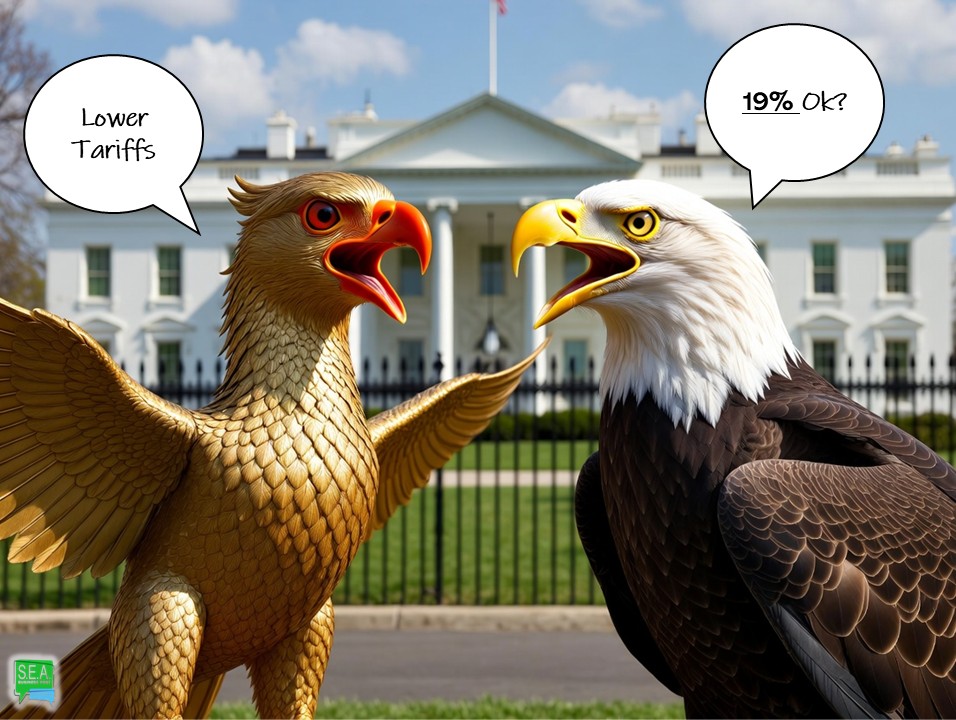
The newly announced framework on tariffs between the United States and Indonesia marks a significant shift in bilateral economic policy. Under the agreement, the US agreed to reduce tariffs on selected Indonesian exports, lowering tariffs from roughly 32 percent to 19 percent. The move represents one of the most substantial trade adjustments between the two countries in recent years and signals a renewed commitment to strengthening commercial ties at a time of global uncertainty.
The recalibration is expected to improve cost competitiveness for Indonesian goods entering the American market. Lower tariffs improve price competitiveness for exporters and can ease inflationary pressures for importers and consumers in the United States. Washington’s decision to ease tariffs reflects broader efforts to reinforce supply chain resilience while maintaining strategic engagement in Southeast Asia, a region that has become increasingly important in global manufacturing networks.
For Indonesia, the adjustment comes at a critical moment as global trade growth remains uneven and capital flows into emerging markets remain selective. Export driven sectors most exposed to US tariffs, including palm oil, processed agricultural products, textiles, and light manufacturing, stand to benefit directly from the new rate. Analysts believe reduced tariffs could stimulate higher shipment volumes, support foreign exchange stability, and improve corporate earnings outlooks for companies reliant on the US market.
Economic Impact on Trade and Investment Flows
The cut in tariffs is projected to reshape trade flows between the two economies in measurable ways. As tariffs decline, trade volumes typically expand due to improved pricing dynamics and stronger buyer demand. Economists caution that while tariffs play a critical role in shaping trade patterns, complementary reforms such as infrastructure upgrades, streamlined customs procedures, and regulatory transparency will ultimately determine the full economic impact of the agreement.
Beyond direct trade effects, the reduction may also encourage fresh capital inflows. Multinational firms assessing manufacturing or sourcing strategies often evaluate tariffs as a central determinant of long term viability. Lower and more predictable tariffs create an environment where companies can plan investments with greater certainty, particularly when geopolitical risks remain elevated in other parts of the world.
Financial markets responded with measured optimism following the announcement. Export oriented firms saw moderate gains, while currency markets reflected improved confidence in Indonesia’s trade outlook. Investors view clarity on trade as a stabilizing factor, especially during periods of global volatility. In emerging economies, sudden changes in trade policies can create sharp swings in valuations, so structured and negotiated adjustments are generally welcomed by institutional investors.
Market Confidence Amid Global Uncertainty
At a time when geopolitical tensions and policy fragmentation continue to influence global markets, stability in trade relations is increasingly valuable. Clear communication and structured reforms around tariffs reduce speculation and policy driven shocks. For publicly listed companies, predictable tariffs help stabilize earnings forecasts and support long term valuation models, particularly in export heavy sectors.
The agreement also reinforces Indonesia’s positioning within ASEAN as a reliable trade partner capable of negotiating balanced outcomes with major powers. By addressing tariffs through dialogue rather than confrontation, both governments demonstrate a pragmatic approach to economic diplomacy. Such cooperation sends a broader message that trade adjustments can be achieved without escalating into wider disputes that disrupt markets.
The Gaza Board of Peace and the Broader Global Context
While trade developments dominate economic headlines, diplomatic efforts elsewhere are shaping global investor sentiment. Discussions surrounding the Gaza Board of Peace, an emerging initiative aimed at coordinating reconstruction and long term stability in the Gaza Strip, highlight the parallel importance of conflict resolution and economic rebuilding in fragile regions.
Markets remain sensitive to instability in the Middle East due to its influence on energy prices, shipping routes, and global risk appetite. In that sense, constructive engagement on trade between major economies offers a contrast to regions facing conflict driven disruption. Economic cooperation can serve as a stabilizing force even when broader geopolitical tensions persist.
The US decision to reduce tariffs on Indonesian goods therefore carries weight beyond bilateral commerce. By nearly halving key tariffs, Washington and Jakarta signal that strategic collaboration remains possible in a fragmented global economy. Stable and transparent trade policies can support export growth, strengthen investor confidence, and deepen diplomatic ties over time.
As governments pursue initiatives such as the Gaza Board of Peace to encourage stability and reconstruction, parallel progress in trade policy underscores a broader reality. Economic growth and political stability are closely connected. Measured adjustments to tariffs, when paired with diplomatic engagement, can contribute to a more predictable and cooperative international environment that benefits businesses, investors, and consumers alike.