






What Is Really Driving Malaysia’s Rohingya Negative Backlash?
A petition on Change.org calling for the removal of Rohingya refugees from Malaysia has reignited a national debate. The creator, listed only as “Saya Anak Malaysia,” provides no verifiable identity, yet the petition has attracted significant attention across social media platforms. Its timing coincides with politically sensitive periods, including upcoming state elections in Johor and the possibility of a Negeri Sembilan vote. While the origins of the petition remain unclear, the discussion it has sparked reflects deeper societal concerns about governance, economics, and social cohesion. The initial grounds of contention in the petition seemed to have stemmed from an online post about unsanitary conditions of the ritual Hari Raya Haji Korban conducted in Malaysia among the Rohingya community.
Public Perception Versus Reality
Much of the online discourse surrounding the Rohingya population centers on safety and public order. Petty crimes occasionally attributed to Rohingya individuals are often highlighted in media and social networks, but these incidents are minor in scale and do not indicate a systemic threat. Despite their visibility, such cases represent only a small fraction of the overall public safety landscape.
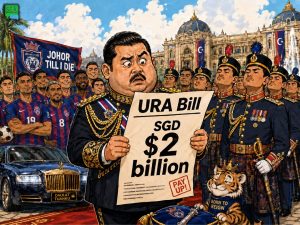
Online discussions frequently focus on isolated incidents involving Rohingya refugees. However, some of the most significant events shaping public opinion in Malaysia in recent years have involved entirely different issues. Malaysians have grappled with tragedies such as the murder of Zara Qairina and the death of firefighter Muhammad Adib during the Seafield Temple riots. More recently, a fatal crash in Johor involving two brothers allegedly racing a Mercedes-Benz and a BMW that claimed the lives of innocent road users and raised concerns about reckless driving, privilege and accountability.
Yet debates surrounding Rohingya refugees often generate a level of public attention that appears disproportionate to the scale of the documented problems, highlighting how some of Malaysia’s most consequential controversies originate far beyond the refugee issue.
Economic Frustration, Political Timing and Social Media
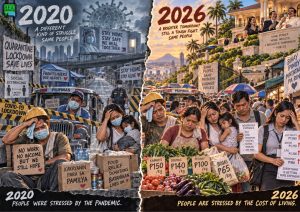
The petition has emerged during a period of heightened economic and political sensitivity. Rising living costs, housing pressures, and concerns about wages contribute to public frustration. At the same time, Malaysia is approaching a politically active period, with attention turning to upcoming state elections, which historically amplify discussions about identity, immigration and social cohesion.
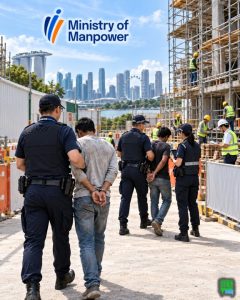
A key factor often overlooked in the debate is that Rohingya refugees in Malaysia are legally prohibited from formal employment. Many are forced into informal or illegal work to survive, as the government does not provide financial support or social safety nets. Public anger that is directed at refugees for economic or labor-related issues is therefore misdirected. The frustration should arguably be aimed at the businesses that employ refugees illegally and at the government, which has not created legal pathways for work, nor addressed structural economic challenges that make jobs scarce and living costs high.
Social media amplifies these dynamics. Minor incidents involving refugees are rapidly shared and discussed, while broader economic issues and governance failures receive less attention. As a result, public attention concentrates on emotionally salient issues, even when the underlying causes are more structural in nature.
The Policy Vacuum
The absence of a coherent refugee policy in Malaysia further compounds public perception. Without legal work rights, access to education, or integration programs, Rohingya refugees exist in a state of uncertainty that affects both them and the host community. Rather than the refugees themselves, structural gaps in policy, lack of economic opportunity, and inadequate government support are at the root of the tension.
The Bigger Question
The petition’s significance lies less in the identity of its creator and more in what it reveals about Malaysian public sentiment. While minor incidents involving refugees are frequently highlighted, deeper drivers of frustration include economic insecurity, governance concerns, social inequality, and the absence of clear long-term refugee policies. The election period amplifies these issues, increasing the visibility of debates about identity and social cohesion.
Public attention is therefore often misdirected. Rather than channeling anger at a community that cannot legally work or support itself, the focus should be on the government’s role in creating sustainable employment, regulating illegal labor practices, and addressing economic pressures that affect all Malaysians.
Understanding the Dynamics
Understanding the Rohingya backlash in Malaysia requires examining public perception, structural policy gaps, economic frustrations, and political timing. Petty incidents occasionally attributed to refugees attract disproportionate attention, while high-profile local events often generate comparatively less sustained public discussion. The anonymous petition illuminates these tensions, serving as a case study in how minor issues become symbolic outlets for broader social, economic, and political anxieties. Ultimately, meaningful reform requires addressing the underlying economic and governance challenges rather than misdirecting frustration toward a community with no legal means of supporting itself.