


Why Is Philippine Business Confidence Worst since Pandemic? What the BSP 2026 Data Really Shows
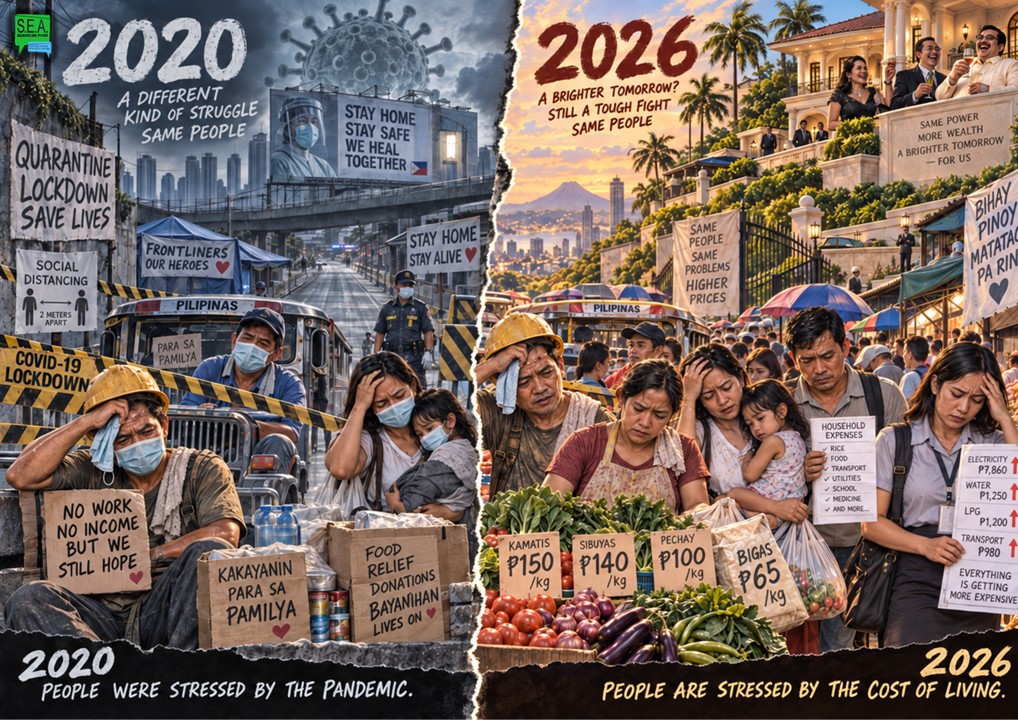
MANILA — Philippine business confidence has fallen to levels far below those recorded during major periods of the COVID-19 pandemic, even though the economy is fully open and still expanding. The contrast is striking: companies today are not dealing with lockdowns or widespread closures, yet the Bangko Sentral ng Pilipinas’ latest surveys show a much deeper degree of pessimism than in 2020 and 2021.
The BSP’s Business Expectations Survey showed the overall confidence index at -20.3% in July 2026, following readings of -24.3% in March, -35.8% in April and -25.2% in May. Confidence briefly recovered to 0% in June before turning sharply negative again.
During the pandemic, by comparison, the confidence index was -5.3% in the third quarter of 2020 and -5.6% in the third quarter of 2021.
The figures raise an obvious question: why do businesses appear more pessimistic today than during periods when large parts of the economy were operating under severe pandemic restrictions?
The answer is that the two periods represent very different forms of economic stress.
An unusually weak confidence reading
The 2026 numbers are weak not only compared with the pandemic, but also by longer historical standards. During the global financial crisis, Philippine business confidence fell to -23.9% in the first quarter of 2009. April 2026’s -35.8% reading was numerically even lower.
Historical comparisons need some caution, however. The BSP shifted its Business Expectations Survey from a quarterly to a monthly format in 2026, with a smaller monthly sample. The underlying survey remains broadly comparable, but monthly readings are not identical to the older quarterly figures.
It is therefore safer to say that business confidence has fallen to historically weak levels, rather than to claim definitively that April marked an all-time record.
More importantly, confidence is not the same as economic output.
The Philippine economy still grew 2.3% year on year in the second quarter of 2026. Services expanded by 4.5% and agriculture by 2.7%, although industry contracted by 2.4%.
The economy is therefore nowhere near the collapse seen during COVID-19. What appears to have changed is the economics of running and expanding a business.
From shutdown pressure to margin pressure
During the pandemic, many companies faced a simple problem: they could not operate normally. Lockdowns, mobility restrictions and temporary closures directly disrupted business activity.
In 2026, companies can operate, but many are being squeezed by higher costs, weaker purchasing power, expensive energy and tighter financing conditions.
Inflation is central to that pressure. Headline inflation reached 7.2% in April 2026 before easing to 6.1% in August, still well above the BSP’s target range.
For companies, persistent inflation can hurt from both directions. Fuel, electricity, transport and imported materials become more expensive, while households facing higher prices for food and other essentials have less money available for discretionary spending.
Companies must then choose between passing higher costs on to customers, which may weaken demand, or absorbing them and accepting lower margins.
That helps explain how an economy can remain open and continue growing while corporate confidence deteriorates sharply.
Oil prices have intensified the problem. Businesses surveyed by the BSP cited Middle East tensions, higher oil prices and persistent inflation among their main concerns. Because the Philippines relies heavily on imported energy, higher fuel costs can quickly spread through transport, logistics, manufacturing and consumer prices.
Interest rates are moving in the opposite direction from 2020
Another important difference is monetary policy.
During the pandemic, the BSP cut interest rates aggressively to support the economy. The policy rate eventually fell to 2.0%, making financing cheaper at a time when economic activity had collapsed.
In 2026, inflation has pushed policy in the opposite direction. The rate reached 5.0% in September.
That matters because the cost of borrowing influences whether companies expand factories, purchase equipment, launch property projects or increase inventories.
A project that made financial sense when money was cheaper may look less attractive at higher interest rates.
This creates an unusual contrast. During COVID-19, businesses faced far greater disruption but benefited from exceptionally loose monetary policy. Today, companies can operate normally but must do so in a much more expensive financial environment.
Investment is already weakening
The confidence figures become more significant when compared with actual investment data.
Gross capital formation fell 9.2% year on year in the second quarter of 2026, while construction declined 14.8% and investment in durable equipment fell 13.6%.
Those declines do not prove that business pessimism caused weaker investment. But they are consistent with companies and investors becoming more cautious.
Investment is particularly important because it reflects expectations about the future. Businesses tend to build factories, purchase machinery and undertake large projects when they expect demand and profits to justify those commitments.
GDP can continue growing for some time even while investment weakens. But prolonged weakness in capital formation can eventually weigh on productivity, hiring and future growth.
Credit is available, but businesses still feel squeezed
The Philippines is not experiencing a broad credit freeze. Bank lending continued to expand in July, including loans to businesses.
Yet firms surveyed by the BSP reported worsening financial conditions. The financial conditions index fell to -31.4%, while perceptions of access to credit also remained negative.
That is not necessarily a contradiction.
Banks can continue lending while companies still view financing as expensive or their own financial position as difficult. A business may borrow because it needs working capital even if it considers current credit conditions unfavorable.
The quantity of loans in the banking system therefore does not tell us whether businesses feel comfortable borrowing.
Consumers are also feeling the pressure
Inflation is hitting some households much harder than the headline figure suggests.
For the bottom 30% of income households, inflation reached 8.2% in August, significantly higher than the national rate.
That matters for companies dependent on mass-market consumption. Lower-income households spend a larger share of their earnings on food, transport and utilities, leaving less room for restaurants, clothing, electronics and other discretionary purchases when prices rise.
Consumers may still be employed and GDP may still be growing, while businesses simultaneously experience weaker demand.
That helps explain why business sentiment can deteriorate faster than headline economic indicators.
Businesses remain more optimistic about the future
One detail in the BSP survey prevents the current figures from looking like outright economic despair.
The 12-month-ahead confidence index remained positive at 29.4% in July, while the three-month outlook also stayed slightly above zero.
Businesses are therefore much more pessimistic about the present than about where conditions may be a year from now.
That suggests many companies see the current pressures as temporary rather than the beginning of a prolonged collapse.
The gap between deeply negative current sentiment and positive future expectations may be one of the most important signals in the survey.
What the data really show
The BSP figures do not mean the Philippine economy is worse today than during the pandemic.
COVID-19 produced a historic contraction, widespread closures and severe disruption to employment and economic activity. Nothing comparable is happening in 2026.
Instead, the comparison highlights a change in the type of pressure businesses are facing.
During the pandemic, many firms could not operate.
Today, businesses can operate, but they are facing higher costs, weaker consumer purchasing power, tighter financing and uncertainty over whether expansion will generate acceptable returns.
That may explain why confidence can be significantly worse even while GDP remains positive.
The Philippines is not experiencing another pandemic-style shutdown. It appears to be dealing instead with a cost-and-confidence problem: businesses remain open and active, but many are becoming more cautious about investment, hiring and expansion.
The next question is whether that pessimism fades as inflation and energy prices ease, or whether it begins to show up more clearly in investment, employment and consumer spending. If the latter happens, the sharp fall in business confidence could prove to have been an early warning rather than simply a gloomy survey.