






US and Philippines to Build Massive High-Tech Business Park to Benefit Global Supply Chain
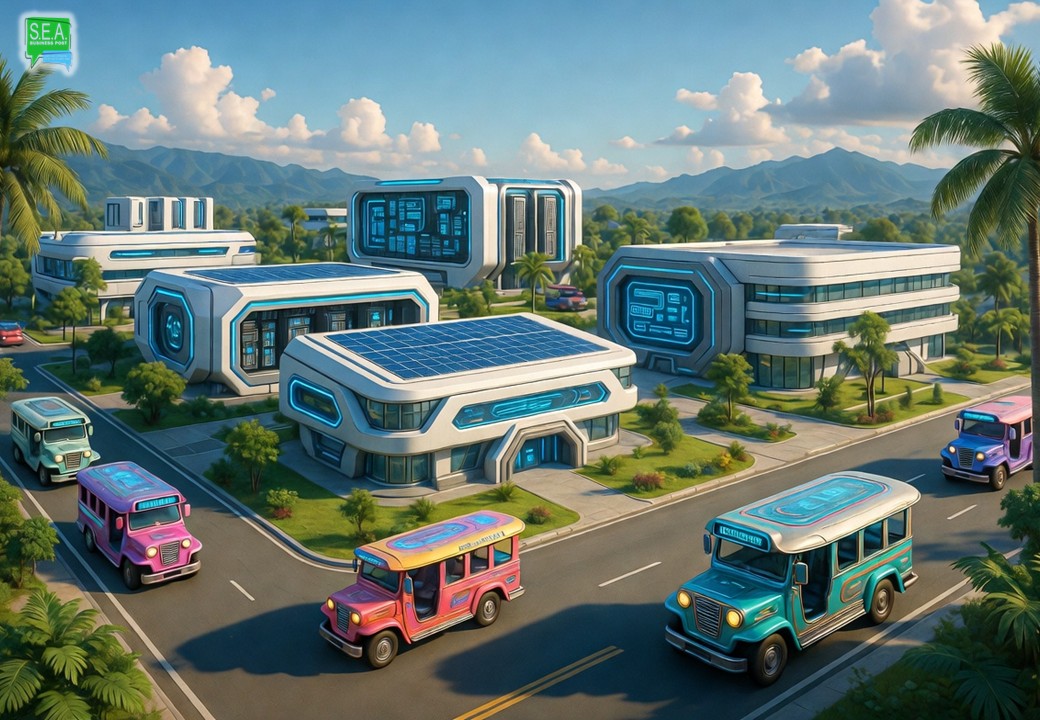
In a landmark move set to bolster economic ties and security, the United States and the Philippines have unveiled plans to build a state-of-the-art high-tech manufacturing zone on Luzon Island. The initiative, which spans 4,000 acres, marks a significant shift in Southeast Asia’s economic landscape, positioning the Philippines as a key player in global supply chains, especially in advanced technology sectors. This venture is part of a broader strategy under the U.S.-led Pax Silica initiative, aimed at ensuring technological and economic resilience among allied countries.
The High-Tech Manufacturing Hub
This ambitious project, set to begin construction in 2026, will focus on manufacturing critical technologies such as semiconductors, artificial intelligence (AI), and advanced computing infrastructure. The development will be strategically located within the Luzon Economic Corridor, which is designed to attract high-tech investments, stimulate job growth, and foster industrial modernization.
The Philippines, with its skilled labor force and proximity to key Asian markets, is poised to become an attractive destination for companies seeking to diversify their supply chains away from China. This high-tech hub is expected to play a pivotal role in reducing vulnerabilities associated with reliance on concentrated production networks. In particular, the facility will serve as a regional base for producing advanced components and critical minerals, essential to the growing demands of industries like electronics and clean energy.
The creation of this business park will not only attract multinational corporations but also enhance the Philippines’ standing as a technological and manufacturing powerhouse in the Indo-Pacific region. By focusing on key sectors like semiconductor production, AI infrastructure, and critical raw materials, this new hub will help future-proof the country’s economy.
What Is Pax Silica?
At the heart of this development is the Pax Silica initiative, a U.S.-led coalition of countries working together to secure and diversify critical supply chains for high-tech industries. Launched in late 2025, Pax Silica is designed to foster greater economic security by reducing dependency on single countries, particularly China, which dominates several critical sectors like semiconductor manufacturing and rare-earth minerals processing.
The initiative’s name reflects the significance of silicon, a key component in semiconductors and digital infrastructure, and its connection to peace and economic stability through diversified global supply chains. The project brings together trusted partner countries, including the United States, Australia, Japan, South Korea, and several Southeast Asian nations, all committed to building resilient, secure, and transparent supply networks.
How Pax Silica Benefits the Philippines
The Philippines stands to gain substantially from its involvement in Pax Silica, especially as it hosts the new high-tech business park. As part of the initiative, the Philippines will strengthen its economic and technological partnerships with the U.S. and other major economies. The development will create a robust ecosystem for tech companies, providing a platform for collaboration and investment in next-generation technologies.
This move aligns with the Philippines’ broader strategy to modernize its economy, reduce reliance on traditional industries, and position itself as a hub for technological innovation in Southeast Asia. The country’s workforce, particularly in tech and engineering fields, is expected to benefit from enhanced job opportunities in research, manufacturing, and engineering, which will help address some of the challenges of youth unemployment.
In addition, the establishment of a specialized manufacturing zone will attract foreign direct investment (FDI) in high-tech sectors, generating much-needed capital and expertise. The Philippines, which has struggled with infrastructure and investment bottlenecks in the past, will now have the opportunity to build critical industrial and logistical capabilities that align with global market trends.
Strengthening the Philippines’ Role in Global Supply Chains
By participating in Pax Silica and hosting the high-tech manufacturing zone, the Philippines is securing its place in the ever-growing global demand for semiconductor chips, AI systems, and green technologies. The growing interest in alternatives to Chinese supply chains has made Southeast Asia a focal point for international businesses looking for stable, reliable, and efficient production bases.
This shift has profound implications for the Philippine economy, as the country seeks to attract investments in areas that will help it leapfrog traditional industries into the future. The new industrial hub will integrate the Philippines more deeply into the world’s cutting-edge industries, especially in sectors critical to global technology development, including semiconductors, AI, and sustainable energy.
What to Look Out For
To fully benefit from the high-tech manufacturing park and avoid it becoming another “white elephant,” the Philippine government must prioritize key actions. These include ensuring robust infrastructure development, such as reliable transportation, energy, and internet connectivity, to support the park’s operations. Investing in upskilling the workforce and fostering educational partnerships will help meet the demand for skilled labor in advanced industries like AI and semiconductors.
Transparency and accountability in managing investments and regulatory processes will be crucial to prevent mismanagement. Encouraging public-private partnerships and creating a competitive investment climate through tax incentives and streamlined business regulations will help attract global companies.
Lastly, integrating sustainability practices into the park’s development will ensure long-term success. By addressing these areas, the Philippines can avoid past mistakes and turn this opportunity into a transformative project for the nation’s economy.