









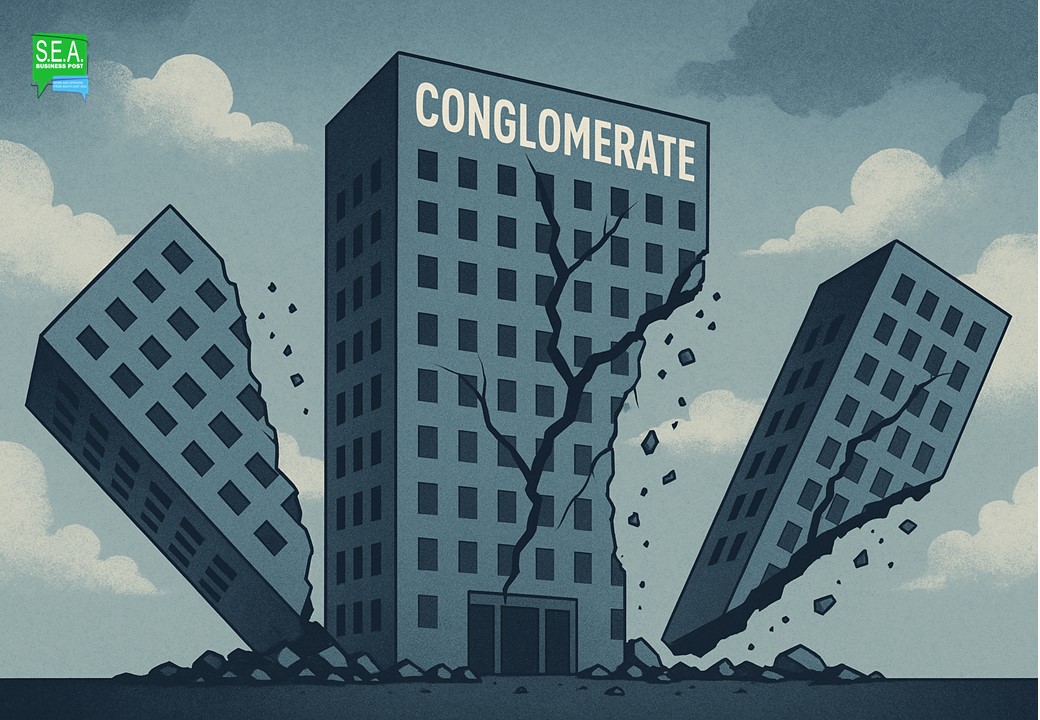
End of the Conglomerate and Mega Corporation Era?
Mega corporations and sprawling conglomerates once symbolized economic might. From GE to Time Warner, companies built empires by acquiring diverse assets. Honeywell, Comcast, and Warner Bros Discovery are among those now trimming down, joining a global trend of strategic breakups.
Initially, the drive to form conglomerates centered on economies of scale. A unified corporate structure enabled shared back-end operations—HR, finance, legal, and IT—across business units. Honeywell, for instance, used its central R&D to serve multiple divisions, from aerospace to building automation. These internal transactions kept spending in-house. If Unit A needed cybersecurity, it paid Unit B, keeping capital circulating within the organization.
Such integration reduced external dependencies and increased leverage with suppliers and partners. It also diversified risk; when one sector faltered, another often thrived. Comcast’s NBCUniversal content operations once balanced out slow growth in its internet services arm. However, this model has started to unravel.
Why are conglomerates breaking up?
One reason is political risk management. Global tensions, especially between China and the US, have put media and tech conglomerates under scrutiny. If one unit—such as a streaming service—airs content critical of a regime, authorities may retaliate. By separating business units, conglomerates limit the fallout. A split shields unaffected units from being banned, fined, or boycotted. Warner Bros Discovery’s operations face such geopolitical risks due to its global media content.
Another factor is valuation clarity. Investors often struggle to assess the value of individual units buried inside large corporate structures. Conglomerate discounts—where the sum of parts is worth more than the whole—are common. Breaking up allows each spin-off to be valued independently. GE’s breakup into energy, aviation, and healthcare arms unlocked billions in shareholder value.
A third reason is strategic focus. Each business has different market cycles, customer bases, and growth models. Spinning off units allows leadership to sharpen operational strategy without distractions. Honeywell’s spin-off of Resideo (its home solutions business) let both firms pursue clearer paths—industrial innovation for one, smart home technologies for the other.
In summary, the breakup of conglomerates reflects a new economic reality. Political tensions, investor pressure, and the need for focus have made the age of the all-in-one corporation less viable. As companies unbundle, they may find that less is indeed more.