









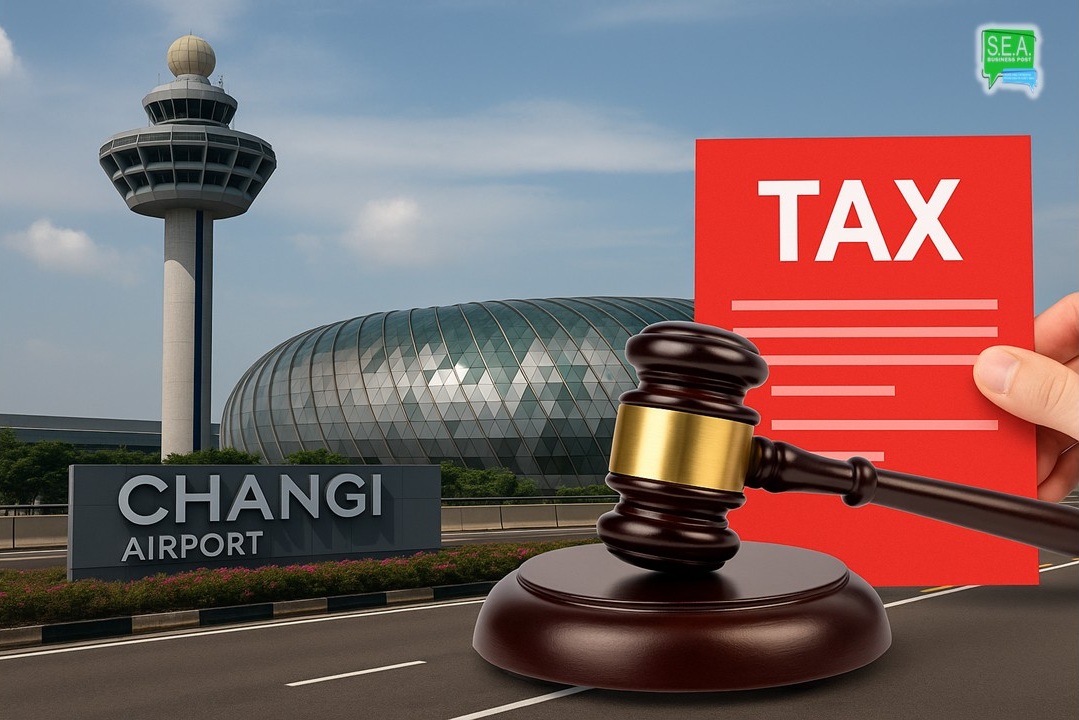
Singapore Court Blow: CAG Loses Tax Relief Battle
Singapore’s Appellate Division of the High Court has dismissed Changi Airport Group’s (CAG) appeal on capital allowance claims. The ruling, delivered on 25 September 2025, clarifies the tax treatment of infrastructure under Singapore law. At issue was whether runways, taxiways, and aprons (RTA) should be classified as “plant” under section 19A of the Income Tax Act.
Singapore Court ruling narrows scope of tax relief
The Court concluded that the RTA are structures, not plant. This interpretation restricts the scope of accelerated capital allowances available to large operators. The outcome carries long-term financial implications for CAG.
$272m in claims rejected
CAG had sought accelerated allowances for S$272 million in expenditure across the 2011 to 2013 assessment years. The company argued that the RTA and Aerodrome Equipment formed an integrated unit essential to airport operations. Accelerated capital allowances would have allowed CAG to write down assets over two or three years.
The Comptroller of Income Tax disagreed, granting only slower industrial building allowances of three percent annually. The Board of Review upheld this decision in 2024. The High Court affirmed it later that year. The Appellate Division has now dismissed the final appeal, awarding S$50,000 in costs against CAG.
Legal principles clarified
The judgment relied on principles from the ZF case. Courts must examine operational role, physical characteristics, permanence, and connection to buildings. Judges found the RTA serve as surfaces, like roads or racetracks, rather than equipment used in trade.
The Court noted that even though the RTA are purpose-built, durable, and essential, their role remains that of premises. Being revenue-generating does not convert a structure into plant. The decision preserves the mutual exclusivity between plant and structures.
CAG policy arguments rejected
CAG argued that excluding RTA from plant classification imposes lasting disadvantages. It warned that airports abroad receive broader tax relief. The judges rejected this position, stressing that Parliament made a deliberate policy choice in 2010 when it abolished the Industrial Building Allowance.
That scheme was replaced by the Land Intensification Allowance, which excluded airport infrastructure. Courts, the judges emphasised, cannot alter Parliament’s fiscal choices. CAG’s argument that courts should adjust tax treatment to offset economic impact was dismissed as contrary to legislative intent.
Business and financial impact
The ruling highlights strict limits around capital allowance claims in Singapore. Operators of large infrastructure projects must prepare for slower depreciation and higher taxable income. This increases long-term financial burdens, particularly for capital-heavy sectors.
For CAG, the denial of accelerated allowances reduces financial flexibility. Taxable income for the disputed years will remain overstated compared with scenarios where faster write-offs are allowed. The ruling also sets a precedent that infrastructure assets, even when essential, will be treated conservatively under tax law.
Impact on other businesses in Singapore
The decision extends beyond aviation. CAG’s loss signals that Singapore courts will adopt narrow readings of “plant”. Construction firms, logistics operators, and utility providers face similar risks. Assets resembling structures—such as specialised roads, pipelines, or ports—may not qualify for accelerated allowances.
This increases pressure on businesses to align tax planning with legislative limits. Companies investing in large projects must expect slower cost recovery. The burden shifts financial strategies toward long-term planning. For multinationals, the ruling shows Singapore favours certainty and legislative clarity over flexibility.
While CAG shoulders the immediate impact, other businesses must treat the judgment as guidance. Courts will enforce strict boundaries, leaving tax incentives to Parliament.
Regional context
Singapore’s stance differs from some jurisdictions that allow broader interpretations of plant. This could affect competitiveness, especially as regional airports and ports expand. Yet policymakers designed the Land Intensification Allowance to target efficient land use in manufacturing and aerospace. Exclusion of airport services reflects strategy, not oversight.
Foreign investors and multinationals will see the ruling as confirmation that Singapore applies tax law strictly. This reinforces regulatory stability, a key factor in investment decisions.
The Appellate Division’s judgment confirms that Singapore’s tax regime favours clarity over flexibility. While CAG faces financial disadvantages, the ruling underscores the principle that courts interpret, not create, tax policy. Businesses across sectors must adapt strategies to align with deliberate legislative reforms.
Legal Reporting Disclaimer:
This article summarises a judgment released by the Singapore Appellate Division on 25 September 2025. The judgment remains subject to final editorial corrections and redactions for publication in the Singapore Law Reports. Readers should refer to the official version for authoritative text.