









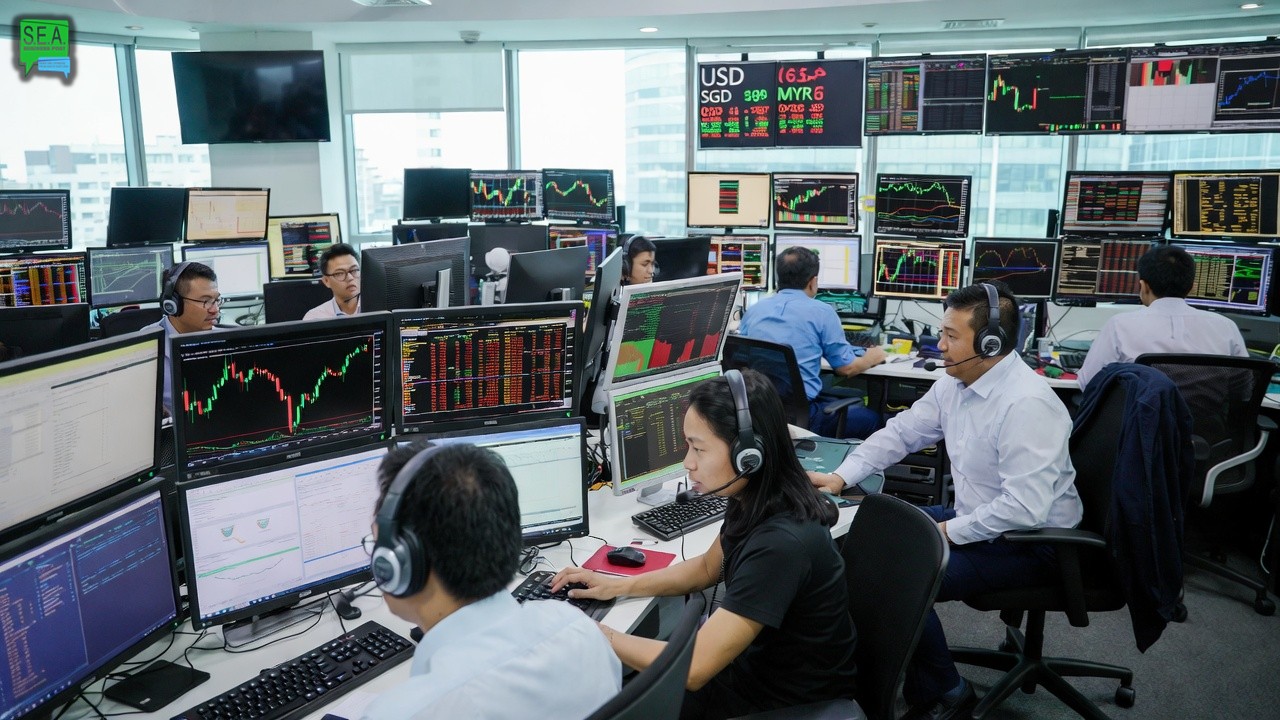
ASEAN’s Top And Worst Performing Currencies In 2025
In 2025, currencies emerged as one of the clearest indicators of economic divergence across Southeast Asia. Exchange rate movements captured the combined effects of interest rate differentials, capital flows, trade policy shifts, and renewed US tariffs. By the end of the year, currencies across ASEAN revealed which economies benefited from global realignment and which struggled with structural and policy challenges, setting the tone for expectations in 2026.
A year of divergence across ASEAN
ASEAN markets did not move in lockstep during 2025. Global uncertainty surrounding US monetary policy, uneven global growth, and persistent geopolitical risks created an environment where currencies increasingly responded to domestic fundamentals rather than regional momentum. Economies with strong external balances, credible institutions, and predictable policy frameworks generally proved more resilient.
US tariffs on selected Chinese and industrial goods reshaped trade flows and investment decisions throughout the year. These measures indirectly affected currencies by accelerating manufacturing relocation, altering export competitiveness, and influencing investor risk perceptions. Countries perceived as stable beneficiaries of supply chain diversification tended to outperform peers facing political uncertainty or fiscal concerns.
Best performing ASEAN markets
Among the strongest performers was the Singapore dollar. Supported by a persistent current account surplus, ample foreign reserves, and a highly credible monetary framework, it benefited from safe haven inflows during periods of market volatility. While Singapore remains deeply exposed to global trade, its services driven economy reduced the direct impact of tariffs on goods exports. In Singapore, currencies stability reinforced investor confidence and strengthened its role as a regional financial anchor.
Vietnam also recorded a strong showing in 2025. Continued inflows of foreign direct investment and resilient export growth supported the balance of payments, even as global demand softened. US tariffs on Chinese exports further accelerated manufacturing relocation into Vietnam, particularly in electronics, machinery, and consumer products. For Vietnam, currencies performance reflected sustained confidence in long term industrial expansion.
Malaysia’s ringgit delivered a steadier outcome compared with previous years. Commodity exports, especially energy related products, provided external support at a time when global electronics demand weakened. Gradual fiscal consolidation and reduced political noise also helped stabilise sentiment. In Malaysia, currencies movements were driven largely by improving fundamentals rather than short term speculative flows.
Worst performing ASEAN currencies
Not all regional units performed well. Indonesia’s rupiah faced repeated pressure during the year despite solid headline growth. Although the country benefited from some supply chain diversification, volatility was amplified by capital outflows during periods of global risk aversion and sensitivity to commodity price swings. In Indonesia, currencies stability remained closely linked to shifts in foreign investor sentiment.
Thailand’s baht also underperformed relative to regional peers. Weak domestic demand, recurring political uncertainty, and an uneven tourism recovery weighed on confidence. While Thailand stood to gain from some trade diversion, export momentum lagged behind neighbours. For Thailand, currency’s weakness reflected deeper concerns about medium term growth prospects rather than isolated market shocks.
Myanmar remained the weakest case in the region. Ongoing political instability and economic disruption continued to erode confidence, leaving little scope for recovery. In Myanmar, currencies depreciation remained severe and persistent, driven largely by non-economic factors.
What this means for 2026
Looking ahead, currencies are likely to remain volatile in 2026 as global interest rate paths, trade policy, and geopolitical risks continue to evolve. While easing global rates could reduce pressure on weaker economies, structural differences across ASEAN will persist.
For businesses and investors, the lesson from 2025 is clear. Currencies in Southeast Asia are increasingly shaped by policy credibility, trade exposure, and geopolitical alignment alongside traditional macroeconomic drivers. In 2026, managing currencies risk will be a strategic necessity rather than a secondary consideration.