





Is Madani Mart Just a Big Rehash Copy of Najib Razak Kedai 1Malaysia?
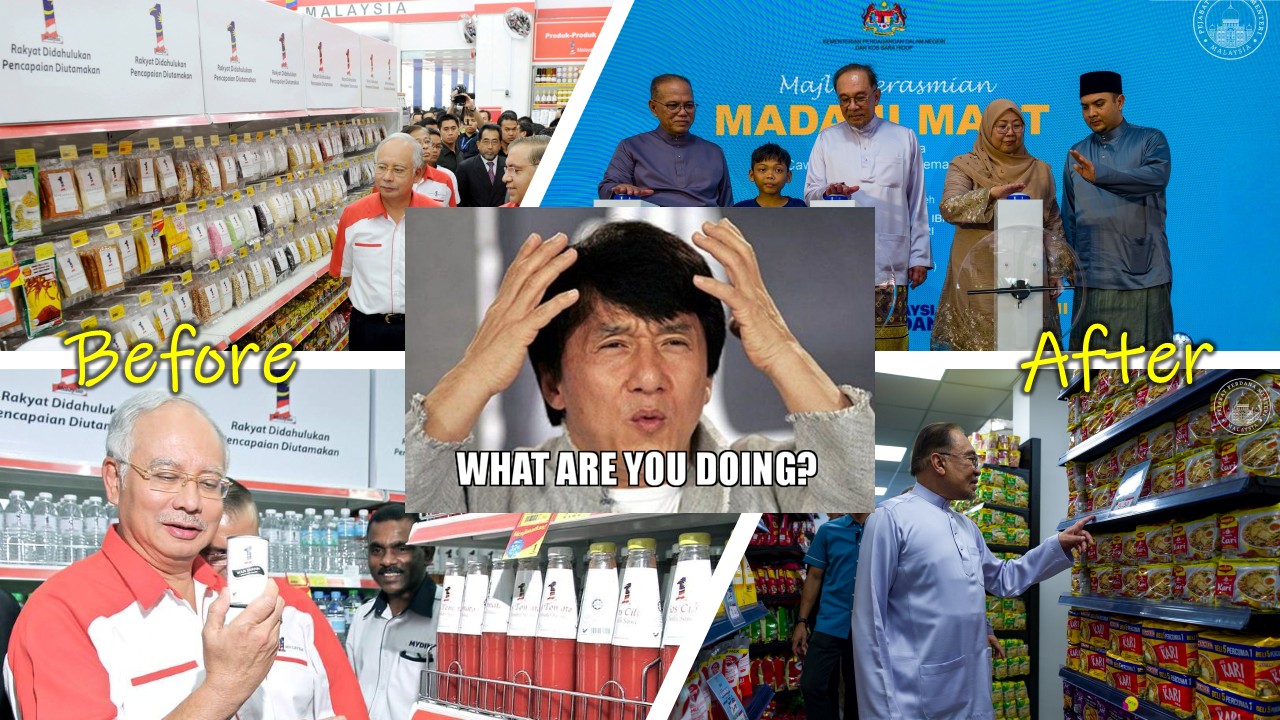
When the Madani government introduced the “Madani Mart” concept, many Malaysians quickly recognized its similarity to the “Kedai 1Malaysia” program launched by former Prime Minister Najib Razak in 2012. Both initiatives aimed to provide affordable goods to the lower-income population, making essential products more accessible.
While the Madani government rebranded this concept, it is essentially a rehash of Najib’s initiative. The Kedai 1Malaysia program sought to address rising living costs by offering affordable groceries and daily essentials. Although it was criticized as a populist tool, it gained significant traction among lower-income groups.
Under the Madani government, the same idea has been revived as “Madani Mart.” The branding and operational structure may have shifted, but the core goal remains the same: providing affordable goods to ease the financial burden on Malaysians. The continuation of Madani Mart aka Kedai 1Malaysia highlights the irony of political parties that once criticized such programs now embracing them.
The Irony of Continuing Najib’s Legacy
What stands out about the Madani government’s approach is how many programs they are now continuing or reviving programs they once harshly criticized when in opposition. Take, for instance, the case of Lynas, the Australian rare-earth mining company. Under Najib’s administration, Lynas was criticized for its environmental impact, with the opposition raising alarms about the risks it posed to Malaysia’s ecosystem. However, the Madani government has chosen to continue Lynas’s operations, albeit under stricter regulations. This shift calls into question the sincerity of the opposition’s previous condemnation and their new stance now that they are in power.
Similarly, the Madani government has continued major infrastructure projects initiated by Najib, such as the MRT3 (Mass Rapid Transit) project. While in opposition, they lambasted the high costs and long-term financial implications of such projects, accusing the previous government of mismanagement. Yet now that they are in charge, the MRT3 project continues as planned, with little sign of it being halted or re-evaluated. The irony is palpable, as the criticisms once voiced by the opposition have faded, and the government seems to embrace these projects without hesitation.
Not just Madani Mart but Other Policies
Another example of the Madani government’s shift in policy is the expansion of data centers and the digital economy. Najib’s government invested heavily in technological infrastructure, with initiatives like the Malaysia Digital Economy Corporation (MDEC) pushing Malaysia’s goal of becoming a regional digital hub. In opposition, the current leadership criticized these initiatives as wasteful and detrimental to Malaysia’s long-term vision. However, since taking office, the Madani government has continued and even expanded these digital policies, fostering a more favorable environment for the growth of data centers and e-commerce.
This shift in narrative raises the question: why were these initiatives initially condemned, only to be revived once the opposition came into power? Could it be that these projects were always beneficial, but opposition leaders only opposed them for political gain? The continuity of such projects suggests that some critiques were misplaced or strategically timed.
The Return of Najib’s Economic Vision
Perhaps the most glaring example of the Madani government’s reversal of its former stance is their adoption of Najib’s economic policies. Many of the projects they once opposed, ranging from the Proton-Geely partnership to foreign investments, particularly from China, are now being embraced, sometimes with only minor tweaks. Under Najib, Malaysia saw significant foreign investment inflows, many of which came from Chinese companies. In opposition, the Madani coalition criticized the dependency on China and the potential long-term consequences. However, since taking office, the government has been active in maintaining strong ties with China, emphasizing the importance of foreign investment for Malaysia’s economy.
The same applies to the Goods and Services Tax (GST). While initially rolled back under the Madani administration, there have been discussions about potentially reintroducing GST to increase government revenue. This is another area where Najib’s economic model, once criticized by the opposition, could return in the form of a reintroduced tax system.
More Political U-Turns?
The Madani government’s continuation of Najib’s legacy is both telling and ironic. The policies they once opposed, from Kedai 1Malaysia to major infrastructure projects like MRT3 and the controversial Lynas project, have now been embraced. While this may suggest that these initiatives were not as misguided as they were portrayed, it also reflects the cyclical nature of Malaysian politics. What is criticized one day is often accepted or even celebrated the next.
In the end, the rehashing of Najib’s programs under the Madani government may not be surprising, but it invites reflection on the consistency or lack thereof in political narratives. Whether this is a pragmatic approach to governance or merely political convenience remains to be seen.