


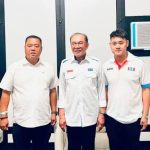


NexG Massive Crisis: Will Anwar Ibrahim stand with Farhash Wafa or Ishak Ismail?
The escalating power struggle inside NexG Berhad has evolved into a political and corporate showdown between two men who both sit close to Anwar Ibrahim. The conflict between Ishak Ismail and Farhash Wafa reveals a deeper erosion of the reform agenda and shows how Malaysia’s governance is drifting back to familiar patterns of patronage and elite capture.
Ishak Ismail and His Long Corporate Trail
Ishak Ismail is well known in Malaysia’s corporate world. His name is tied to the Kenmark scandal, where the Securities Commission charged him for making misleading statements that triggered market panic. He also faced insider trading accusations involving large blocks of Kenmark shares. His earlier conduct in the Idris Hydraulic case added to a long trail of regulatory issues.
Despite this history, Ishak remains influential and is considered a long-time supporter of Anwar Ibrahim. His position in NexG is not the stance of an outsider attacking the government. Instead, he represents a faction within the broader pro-Anwar ecosystem. His recent settlement with regulators renewed questions about his suitability, yet he continued to build his stake inside NexG, placing him at the center of the company’s internal crisis.
Farhash Wafa and the Rise of a Political Proxy
Unlike Ishak, Farhash Wafa is not a traditional entrepreneur. He did not build companies from scratch nor operate businesses in the conventional sense. His rise came from political proximity. As Anwar’s former political secretary and former PKR Perak chief, Farhash Wafa moved from party circles into corporate structures through connections rather than enterprise. He functions more as a business proxy, a node that links political influence to commercial interests.
His most prominent structure is Rosetta Partners, which owns a significant stake in HeiTech Padu. Rosetta sits under Mfivesouthsea, jointly owned by Farhash Wafa and Sultan Muhammad V. This arrangement raised concerns because HeiTech Padu secured sensitive government technology contracts during the same period Rosetta acquired its stake. Critics questioned whether political access rather than market merit fueled the expansion.
Bloomberg later reported that Anwar allegedly instructed the anti-corruption agency not to investigate Farhash Wafa. Although denied, the report intensified public concern over selective enforcement and eroded confidence in the administration’s integrity.
The Rafizi Fallout and Intimidation Claims
Rafizi Ramli added to the tension when he revealed whistleblower information linking Farhash Wafa to corporate dealings that deserved scrutiny. Rafizi also reported that his son faced an intimidation incident after he named companies tied to Farhash Wafa. These claims remain untested, yet they contributed to Rafizi’s declining influence and signaled a wider internal fracture. While Rafizi lost ground, Farhash Wafa gained even more visibility in corporate networks aligned with the government.
Which Figure Presents Greater Risk?
Ishak carries a documented history of regulatory breaches, but he is a known quantity. His controversies are public and traceable. Farhash Wafa presents a different and more complex risk. He lacks a corporate track record but holds influence through political linkage. He appears across multiple companies not as a builder but as a proxy. His presence signals political patronage, opaque shareholding structures and unusual access to state-related deals. While Ishak represents the old corporate shadows, Farhash Wafa represents a newer version of political capitalism that operates behind closed doors.
What It Means for NexG
NexG now sits inside a political tug-of-war. Instead of focusing on technology, identity systems and long-term strategy, the company has become a battleground for influence. Ishak signals aggressive corporate maneuvering within the pro-Anwar camp. Farhash Wafa signals political capture inside a company linked to government contracts. Investors face instability created not by market forces but by internal power competitions.
Anwar Ibrahim’s Reform Collapse
The NexG conflict is more than a corporate dispute. It reflects a larger failure under Anwar Ibrahim. For decades, Anwar accused UMNO and Barisan Nasional of cronyism, political interference and elite networks that strangled public institutions. Yet under his leadership, similar patterns have returned. Politically linked figures fight for control over companies tied to national systems. Enforcement bodies remain silent. Reformers are sidelined. Proxies rise.
The struggle between Ishak Ismail and Farhash Wafa shows that Malaysia did not escape its old politics. Under Anwar Ibrahim, it simply evolved into a new form with the same consequences.