








Mitsubishi makes 2 huge bets in Indonesia
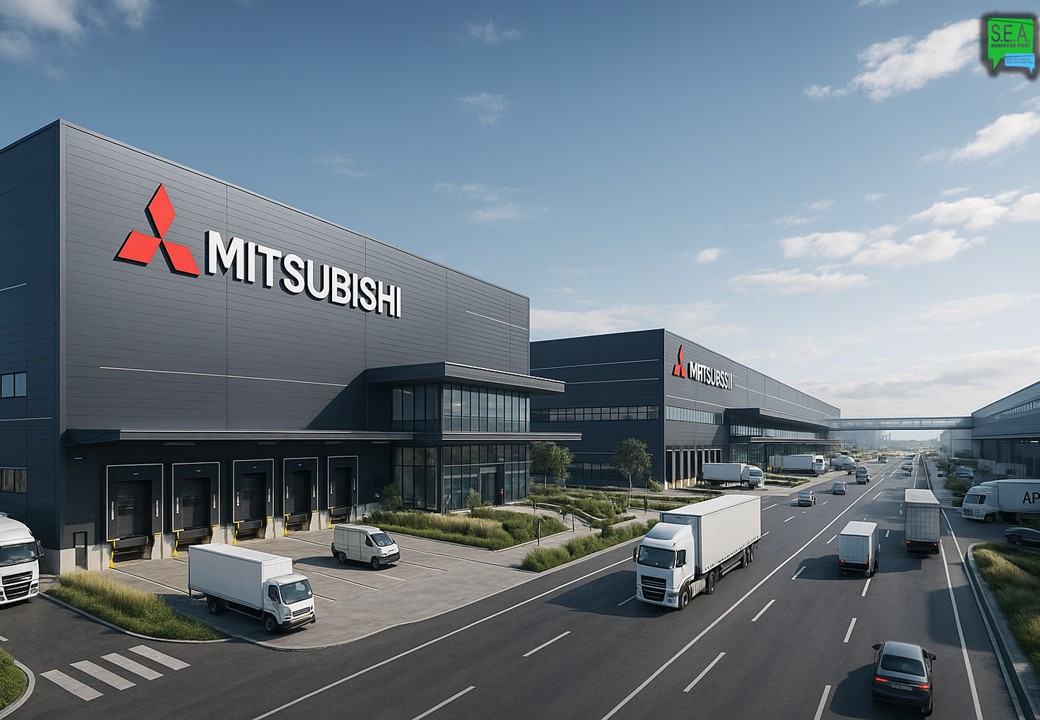
Mitsubishi is moving aggressively into the Southeast Asian logistics sector and has announced plans to construct two large logistics centers near Jakarta, Indonesia. The Japanese corporate giant believes that demand for warehouse capacity will increase sharply due to continued growth in online shopping activities and the expansion of electric vehicle production across the region. The company is positioning itself for long term opportunities through infrastructure development rather than short term market speculation. Mitsubishi selected Indonesia because the country represents one of the largest consumer markets in Asia with a rapidly developing industrial supply chain.
Mitsubishi will build facilities that cover approximately 110,000 square meters in total, and the project is scheduled for completion by 2027. It has invested more than ten billion yen into this initiative, a figure that reflects confidence in the future scale of logistics activity throughout Indonesia. The company expects that warehousing will play a pivotal role in the commercial flow of goods, particularly as e commerce accelerates and manufacturers look for reliable storage and distribution systems.
Infrastructure designed for growth
The first advantage of this project is that Mitsubishi will develop modern logistics capability where infrastructure gaps still exist. Many companies in Indonesia rely on smaller, fragmented warehouses that cannot support high throughput or technical storage requirements. The Japanese industrial giant aims to solve this bottleneck by providing integrated facilities with the ability to manage thousands of daily parcel movements. The company also plans to incorporate scalable shelving, improved automation readiness, and environmentally efficient building layouts.
Why demand is rising
The first driver of demand is e commerce. Mitsubishi recognizes that consumer purchasing behavior is shifting away from physical retail and toward digital platforms. Online shopping requires rapid breakdown of shipments, last mile delivery capability, and large storage areas for fast moving goods. Mitsubishi facilities are designed to serve this need. The second driver is the electric vehicle supply chain. Battery systems, power modules, sensors, and other components require safe storage and controlled handling. Mitsubishi is developing logistics capacity that suits these technical requirements.
What this means for Indonesia
This investment signals confidence in Indonesia’s economy. Mitsubishi involvement sends a message that global corporations consider the region viable for industrial expansion. New facilities typically produce indirect economic benefits such as job creation and skill development. Its projects can lead to innovation in transport systems and greater supply chain reliability. Strong logistics support will encourage more manufacturers to locate operations in the country and increase export competitiveness.
Benefits for Mitsubishi clients and partners
Companies that rely on warehousing will have access to more professional capacity once construction is complete. Mitsubishi will offer improved delivery speed, more accurate tracking, and higher dependability. Manufacturers that deal with electric vehicle components could gain a more stable logistics base that reduces shipping delays. Mitsubishi facilities may attract e commerce companies looking for faster fulfillment solutions and better inventory management technology. As scale increases across tenants, its operating efficiency is expected to improve, and rental returns may strengthen.
Risks and strategic considerations
There are challenges to consider. Mitsubishi must assume that demand will continue rising to justify large capital costs. If economic conditions weaken or EV adoption slows, the industrial giant may face pressure on occupancy rates. Competition could also increase if other logistics developers see the same long-term potential. Despite this, Mitsubishi appears confident that strategic timing is on its side. The company is entering the market before capacity shortages tighten further.
In summary, Mitsubishi development of two new logistics centers illustrates forward planning, calculated risk taking, and belief in regional transformation. The corporate giant understands that technology, transport, and commerce are converging, and construction of modern logistics infrastructure will be essential to support that future. Mitsubishi is investing today to secure tomorrow’s advantage, and the outcome of this decision will shape Southeast Asian logistics for many years.