


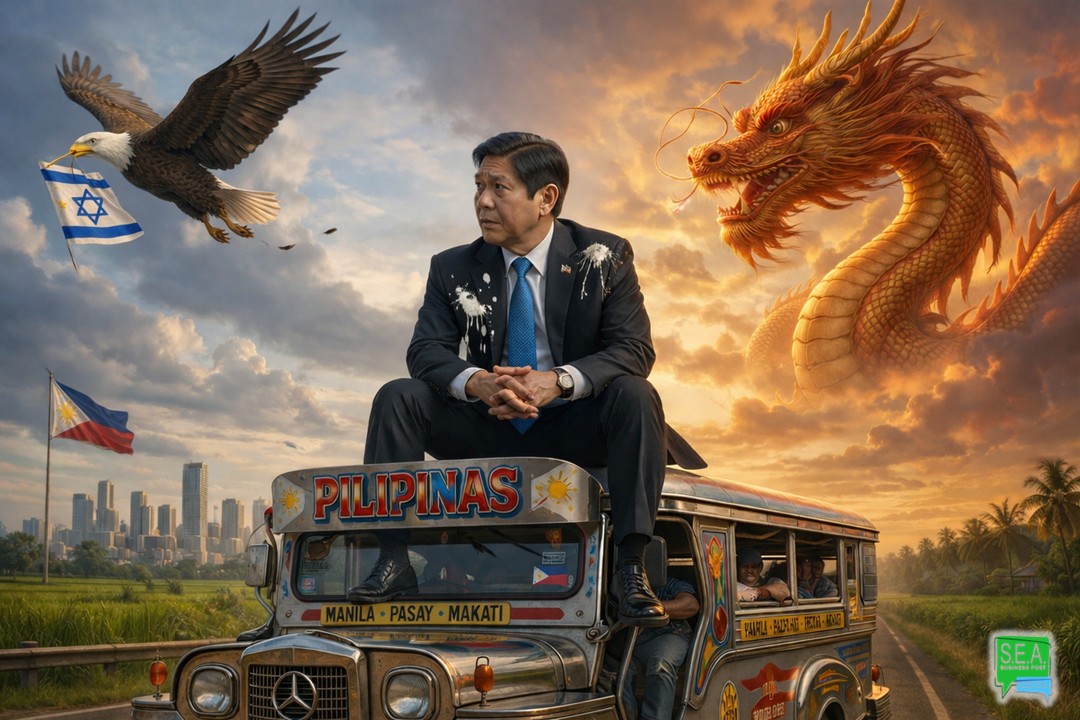
Marcos Humbled Big: Philippines To Reset Ties with China
On 25 March, President Ferdinand Marcos Jr. announced the Philippines’ decision to reset its relationship with China, a notable diplomatic shift aimed at addressing growing energy and economic challenges. Marcos stressed the importance of separating the South China Sea dispute from potential cooperation areas like trade, infrastructure, and energy. This marks a change in tone, especially following years of tense relations with China.
The reset represents a humbling acknowledgment that the Philippines cannot afford to disregard a vital neighbour, particularly when faced with an energy crisis and volatile global oil prices.
Rising Tensions and Confrontation with China
In recent years, relations between the Philippines and China have been marked by increasing tensions. Under Marcos’ predecessor, Rodrigo Duterte, the country adopted a more neutral approach, occasionally softening its stance on the South China Sea in favour of pursuing economic cooperation with China. However, with Marcos’ rise to power, the Philippines shifted its stance, taking a more hostile approach toward Beijing.
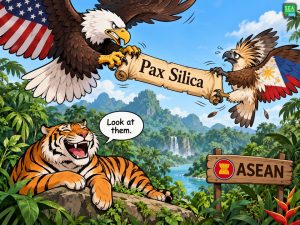
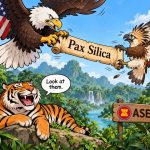
Aligning more closely with the United States, the Philippines engaged in joint military exercises and condemned China’s actions in the South China Sea. The Philippines began to resemble a proxy in the broader U.S.-China geopolitical struggle. This alignment with Washington meant that China was often cast as an adversary, with the Philippines’ military cooperation with the U.S. becoming a point of friction. Manila’s heightened rhetoric only deepened the divide.
At the same time, the Philippines’ reliance on imported energy became increasingly apparent. As oil prices surged and global supply chains were disrupted, the Philippines found itself in a precarious position. The government’s aggressive stance toward China started to clash with the country’s growing energy needs. The Philippines could no longer afford to isolate one of its largest trading partners.
Duterte’s Approach
Before Marcos, Duterte’s policy toward China was more cooperative. His “pivot to China” sought to strengthen economic ties, downplay territorial disputes, and attract Chinese investment. Duterte’s approach provided the Philippines with much-needed infrastructure projects and energy deals, particularly in the face of rising oil prices and regional instability. His foreign policy was seen as a way to distance the Philippines from U.S. influence while boosting bilateral cooperation with China.
Duterte’s strategy had mixed reviews but was motivated by practical considerations: the Philippines needed energy security, and China was an attractive partner. Duterte’s willingness to engage with China was largely driven by a desire to secure resources for the country’s economic development, even if it meant putting aside some of the South China Sea disputes.
However, as the geopolitical landscape shifted, particularly with the rise of tensions in the Middle East and the ongoing Iran conflict, the Philippines began to feel the strain. This global instability exposed the fragile nature of Duterte’s approach. With escalating fuel prices and a strained supply chain, the Philippines found itself once again needing to confront its energy vulnerabilities.
The Marcos Administration Facing Reality
Under Marcos, the Philippines’ energy crisis has come to a head. The ongoing Middle East conflict and the disruption of oil supply lines have left the Philippines vulnerable to skyrocketing fuel costs. Marcos admitted that the Philippines’ fuel reserves were dangerously low, with stocks expected to last only 45 days.
In an effort to ensure energy security, the Philippines has turned to new sources of oil. Russian crude oil, which hadn’t been imported for five years, arrived in the Philippines in late March aboard the tanker Sara Sky. This marked a dramatic shift in the Philippines’ energy procurement strategy, showing that the country was now willing to engage with nations that it had previously avoided.
Petron, the Philippines’ largest oil refiner, received the shipment, which underscores the growing realisation that securing reliable energy sources requires flexibility. While Russia’s geopolitical stance raises concerns, the Philippines can no longer afford to be selective. As Marcos acknowledged, “nothing is off the table” when it comes to ensuring the country’s energy security.
A Humbling Realisation
The shift in Philippines-China relations signals a humbling realisation for the Marcos administration. As the Philippines faces rising energy costs and an unstable global supply chain, the need to cooperate with China has become increasingly urgent. This reset in diplomatic ties reveals a recognition that isolation from China could harm the nation’s economic future.
Under the strain of an energy crisis and rising fuel costs, Marcos has learned that diplomacy, even with rivals, can be a crucial tool in securing the nation’s future. Cooperation with China, particularly on energy, is no longer a choice but a necessity. The Philippines is now forced to swallow its pride and seek practical, pragmatic solutions to its most pressing challenges.
In conclusion, the Philippines’ approach to China is shifting from confrontation to cooperation. With Marcos at the helm, the Philippines has learned that prioritising energy security and pragmatic diplomacy may be more beneficial than maintaining rigid stances in the face of global instability. The reset in relations reflects the Philippines’ broader recognition that China is a vital partner for securing its energy future.